

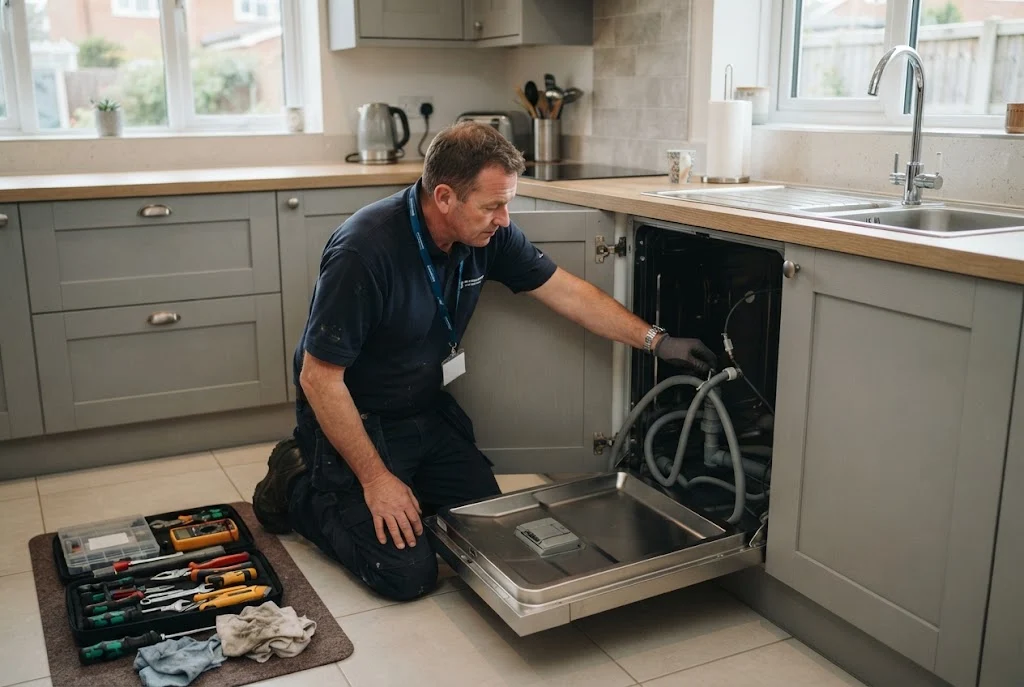
A kitchen appliance installation service can make fitting a new appliance safer, easier and more convenient. Whether you are replacing a washing machine, adding a dishwasher, fitting a new cooker or installing a large refrigerator, correct positioning and connection matter. Appliances need appropriate access to electricity, water, drainage, ventilation or gas supplies depending on the model.
Professional installation is particularly useful when an appliance is built into a kitchen, requires specialist connections or needs to be positioned precisely within existing cabinets. This guide explains what professional appliance installation involves, which appliances commonly need installation, what to check before booking and when specialist electrical or gas professionals may be required.
What Is a Kitchen Appliance Installation Service?
A kitchen appliance installation service involves preparing the designated space, positioning the appliance and completing the appropriate connections according to the manufacturer’s instructions and the property’s existing services.
The exact work depends on the appliance. A washing machine generally needs a suitable water supply, waste connection and electrical supply. A dishwasher also requires appropriate water, drainage and electrical access. A built-in refrigerator may require careful positioning and ventilation, while a cooker can involve more complex electrical or gas requirements.
A professional installer can also check that the appliance fits the available space and that doors, hoses, cables and controls remain accessible after installation.
Why Professional Appliance Installation Matters
Large kitchen appliances can be heavy, powerful and difficult to position. Incorrect installation can lead to problems such as leaks, unstable appliances, damaged connections, poor ventilation or electrical faults.
Electrical Safety First highlights the particular risks associated with kitchens because they combine water, hot surfaces, trailing cables and high-power electrical appliances. It also recommends that large appliances such as dishwashers and washing machines are installed properly and that sockets remain accessible where possible.
Professional installation can therefore be more than simply connecting an appliance. It is also about ensuring the installation is appropriate for the appliance, kitchen layout and available services.
Kitchen Appliance Installation Service Near Me
When searching for a kitchen appliance installation service near me, consider the type of appliance you need installed before choosing a provider. Some installers specialise in particular brands or appliance categories, while others provide broader domestic appliance services.
Before booking, check:
- Whether the installer handles your specific appliance type.
- Whether the service includes positioning and connection.
- Whether additional plumbing or electrical work is included.
- Whether built-in appliances can be fitted into existing units.
- Whether old-appliance removal is available if required.
- Whether the installer provides documentation or confirmation of completed work.
- Whether specialist gas or electrical work is required.
It is also useful to provide the appliance model and dimensions when requesting a quotation. This can help the installer determine whether the existing space and connections are suitable.
Cooker Installation Near Me: What You Need to Know
Cooker installation near me is a common search when replacing an old cooker or completing a kitchen renovation. However, cooker installation is not always the same as installing a standard plug-in appliance.
Some electric cookers and ovens require a dedicated electrical circuit or a suitable high-load connection. The manufacturer’s installation instructions should be followed, and electrical work should be undertaken by a suitably competent professional.
Gas cookers require particular care because they involve gas connections and combustion. Gas-related installation and servicing should be carried out by an appropriately qualified Gas Safe registered engineer.
If your existing oven or cooker has developed a fault rather than needing replacement, the separate oven repair service guide covers common faults, repair considerations and maintenance.
Washing Machine Installation
A washing machine needs more than an electrical connection. It normally requires a suitable water inlet, waste connection and stable, level positioning.
Before installation, make sure the intended location provides enough room to move the machine into position and access its connections. The floor should be suitable for supporting the appliance, and the machine should be level to help reduce excessive movement during operation.
Electrical Safety First advises consumers to have washing machines fitted by a competent installer and to follow the manufacturer’s instructions carefully. It also warns against using extension leads with large appliances because of the potential for overloading.
After installation, the machine should be checked for leaks and unusual movement. Running an appropriate test cycle can help confirm that water enters and drains correctly.
Dishwasher Installation
Dishwasher installation requires careful attention to the available space, water supply, drainage and electrical connection. Built-in models also need to fit correctly within the kitchen cabinetry.
Electrical Safety First recommends that dishwashers are fitted by a competent installer. Its guidance also highlights the need for suitable access to the water supply, drain and wall socket, while advising against using an extension lead for this type of large appliance.
Once the dishwasher has been connected, a test cycle can help identify water-flow, drainage or connection problems before the appliance is used normally.
Fridge Installation and Positioning
Fridge installation may appear straightforward, but larger or integrated models can require careful positioning. The appliance needs adequate space and should be installed according to the manufacturer’s ventilation and clearance requirements.
Integrated refrigerators can be particularly demanding because the appliance and cabinet door need to work together correctly. Incorrect alignment can affect how the door closes and may interfere with normal operation.
Before installation, measure the available opening rather than relying only on the advertised appliance dimensions. Consider the height, width, depth, door-opening direction and access route into the property.
Appliance Installation Before Delivery
Good preparation can make installation considerably easier. Measure the route from the entrance to the kitchen, including doorways, corridors and stairs. Confirm that the appliance can physically reach its final location.
Check the manufacturer’s required clearances and make sure existing electrical, water, drainage or gas connections are accessible. If cabinets need modification, establish this before the appliance arrives rather than discovering the issue during installation.
For integrated appliances, confirm the cabinet dimensions and mounting requirements. A small measurement error can prevent a large appliance from fitting correctly.
Electrical Safety During Appliance Installation
Kitchen appliances can place substantial demand on an electrical installation. Large appliances should not simply be connected through unsuitable extension leads or improvised adapters.
Electrical Safety First advises that kitchen sockets and switches should be positioned safely away from sinks where possible. Its guidance also notes that sockets controlling large appliances such as washing machines and dishwashers should remain accessible where practical.
If an appliance requires new wiring, a dedicated circuit, changes to the consumer unit or other electrical alterations, arrange the work with a suitably qualified electrician rather than treating it as ordinary appliance installation.
Warning signs such as scorch marks, buzzing, crackling, repeated fuse failures, circuit-breaker trips or unusually hot plugs and sockets should not be ignored. Disconnect the appliance where safe to do so and arrange professional assessment.
Gas Appliance Installation
Gas appliance installation requires a different level of specialist knowledge from standard appliance fitting. A gas cooker or hob must be installed in accordance with applicable safety requirements and the manufacturer’s instructions.
For gas work, use a Gas Safe registered engineer who is appropriately qualified for the appliance and type of work involved. GOV.UK states that landlords must ensure gas equipment they supply is safely installed and maintained by a Gas Safe registered engineer.
Never attempt to disconnect, modify or repair a gas connection simply because the appliance appears easy to access. If you smell gas or suspect a gas leak, follow the appropriate emergency gas safety procedure and seek professional help.
Built-In Kitchen Appliance Installation
Built-in appliances require additional attention because they become part of the kitchen layout. Ovens, integrated dishwashers, built-in refrigerators and other appliances need to align with surrounding cabinets while maintaining the clearances specified by the manufacturer.
A professional installer can check the available opening, appliance position, door movement and connection access before completing the installation.
This is particularly important when replacing an appliance with a newer model. Two appliances that appear similar in size may have different ventilation, mounting or connection requirements.
Should You Install Kitchen Appliances Yourself?
Some basic appliance connections may be possible for a competent homeowner when the manufacturer explicitly allows it and no specialist work is required. However, installation becomes more complicated when plumbing, electrical alterations, built-in cabinetry or gas connections are involved.
Before attempting DIY installation, read the manufacturer’s instructions and determine exactly what work is required. If the task involves gas, fixed electrical wiring or modifications outside your competence, use an appropriately qualified professional.
For rented properties, tenants should also check their tenancy agreement before arranging alterations or specialist work. GOV.UK guidance states that landlords are generally responsible for certain repairs and safety matters, including gas appliances, gas systems and electrical wiring.
Kitchen Appliance Installation for Landlords and Rental Properties
Landlords who provide appliances have additional safety responsibilities. GOV.UK states that landlords must ensure gas and electrical equipment they supply is safely installed and maintained. In England, electrical safety rules for rented properties also require relevant electrical installations to be inspected and tested by a qualified person at least every five years.
This makes professional installation particularly relevant when a landlord replaces a cooker, washing machine, dishwasher, fridge or another appliance supplied as part of a tenancy.
Keeping installation records, appliance information and relevant safety documentation can also make future maintenance and repairs easier.
How Much Does Appliance Installation Cost?
The price of appliance installation varies according to the appliance, location, installation complexity and condition of the existing connections. A straightforward replacement may involve relatively little work, while a new installation requiring plumbing, electrical modifications, cabinetry adjustments or gas work can cost more.
When comparing quotes, check what is actually included. One provider may quote only for connecting the appliance, while another may include delivery positioning, removal of the old appliance, testing and disposal.
Ask whether additional work will be charged separately and whether the quoted price includes VAT where applicable. A clear quotation can prevent unexpected costs after the installation begins.
What to Do After Appliance Installation
Once an appliance has been installed, check that it operates normally before relying on it. Look for water leaks around washing machines and dishwashers, confirm that doors close correctly and make sure there are no unusual sounds, smells or electrical warning signs.
For appliances connected to water, inspect the relevant connections after the first use. For electrical appliances, check that plugs and sockets remain cool and show no signs of damage.
Registering the appliance with the manufacturer can also be useful. It may make it easier to receive safety recall information and obtain support if a fault develops later.
When Installation and Repair Services Overlap
Installation and repair are separate services, but they can sometimes form part of the same kitchen maintenance plan. An appliance may need professional diagnosis before you decide whether repairing it or replacing it makes financial sense.
For broader household appliances, white goods repairs covers common repair requirements for washing machines, fridges and other domestic appliances. This helps distinguish appliance installation from the repair and maintenance work that may be required later.
For smaller non-specialist jobs around the property, handyman services may also be relevant, although gas and specialist electrical work should remain with appropriately qualified professionals.
Final Thoughts on Kitchen Appliance Installation
A professional kitchen appliance installation service can help ensure that a new appliance is positioned correctly, connected safely and ready for normal use. Washing machines, dishwashers, fridges, ovens and cookers all have different installation requirements, so the right approach depends on the appliance and the existing kitchen infrastructure.
Good preparation is equally important. Measure the available space, check connection points, read the manufacturer’s requirements and identify any specialist work before booking an installer. Where gas or fixed electrical work is involved, use an appropriately qualified professional.
Taking these steps can make installation smoother while reducing the likelihood of leaks, connection problems, poor positioning or avoidable damage. It also creates a stronger foundation for ongoing appliance maintenance and future repairs.
In the realm of home improvement, the synergy between professional appliance installation and general maintenance services cannot be overstated. When new kitchen appliances are integrated into an existing layout, ensuring they function optimally requires not just the expertise of an installation specialist but also ongoing support to maintain their performance. This is where reliable handyman services come into play, offering a comprehensive solution for everything from minor repairs to significant enhancements in your home. By leveraging both installation expertise and handyman assistance, homeowners can create a seamless kitchen environment that not only meets their immediate needs but also supports the longevity of their investments. Understanding the full scope of services available ensures that every aspect of kitchen functionality is addressed, paving the way for a truly efficient and enjoyable culinary space.