

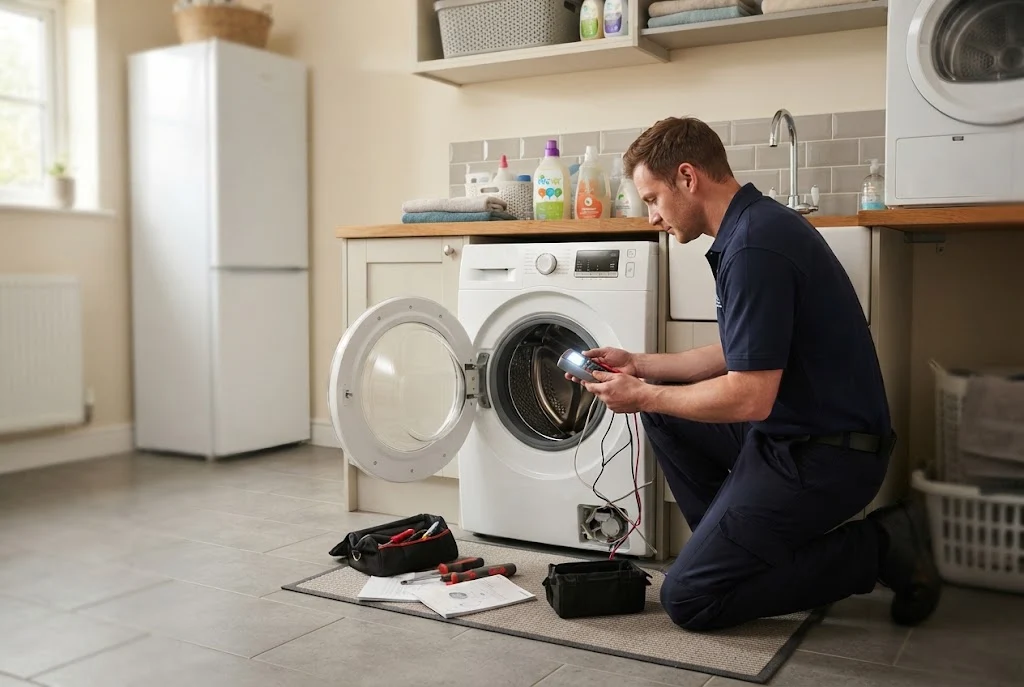
White goods repairs can help extend the useful life of essential household appliances such as washing machines, refrigerators, freezers, dishwashers and tumble dryers. When one of these appliances stops working properly, replacing it immediately is not always necessary. A professional engineer can often diagnose the fault, identify the affected component and determine whether a repair is practical.
For UK households, reliable appliances are an important part of everyday life. A washing machine that will not drain, a fridge that is no longer cooling properly or a dishwasher that leaks can quickly become disruptive. This guide explains common white goods problems, when professional appliance repair services are appropriate, how to prepare for an engineer visit and what you can do to maintain domestic appliances.
What Are White Goods Repairs?
White goods repairs generally refer to the diagnosis, maintenance and repair of larger domestic appliances used around the home. These commonly include washing machines, tumble dryers, refrigerators, freezers, dishwashers and some cooking appliances.
The exact repair depends on the appliance and the fault. An engineer may inspect electrical components, pumps, motors, heating elements, thermostats, seals, valves, hoses, control systems or other parts. The purpose of a professional diagnosis is to establish the actual cause rather than replacing components unnecessarily.
Some appliance faults are minor, while others may indicate that an appliance has reached the end of its economical service life. A proper assessment can help you make that distinction.
Common White Goods Repair Problems
Domestic appliances can fail in many different ways. Some problems develop gradually, while others appear suddenly after years of normal use.
Washing Machine Problems
Washing machines commonly experience issues involving drainage, water supply, spinning, heating or door mechanisms. A machine may fail to drain, stop during a cycle, refuse to spin or produce unusual noises.
Before arranging repairs, check simple issues such as whether the machine is receiving power, whether the water supply is open and whether the drain filter requires cleaning. If the appliance continues to malfunction, professional diagnosis may be appropriate.
Persistent leaks, electrical faults or unusual burning smells should not be ignored. Stop using the machine and seek appropriate professional assistance when there is a potential safety concern.
Fridge and Freezer Problems
Refrigerators and freezers need consistent temperature control to keep food safely stored. Problems can include inadequate cooling, excessive frost, unusual noises, water accumulation or a compressor that appears to run continuously.
Some temperature issues can be related to blocked airflow, incorrect settings or an overloaded appliance. However, persistent cooling problems may involve thermostats, fans, sensors, seals or refrigeration components.
Keep refrigerator and freezer doors properly closed and check door seals for visible damage. If an appliance is no longer maintaining a suitable temperature, deal with the problem promptly to reduce food-storage risks.
Dishwasher Problems
Dishwashers may stop draining, fail to fill with water, leave dishes dirty or develop leaks. Blocked filters, spray arms and drainage systems can sometimes contribute to poor performance.
Regular cleaning of accessible filters and following the manufacturer’s maintenance instructions can help prevent avoidable problems. If a dishwasher repeatedly leaks or develops an electrical fault, professional attention may be required.
Tumble Dryer Problems
A tumble dryer that takes unusually long to dry clothes may have restricted airflow, a blocked filter or another mechanical or heating problem. Excessive lint accumulation can also create a fire risk.
Clean the lint filter according to the manufacturer’s instructions and keep ventilation areas clear. If the appliance overheats, smells of burning or behaves abnormally, stop using it until the cause has been investigated.
White Goods Repair vs Replacement
When an appliance stops working, one of the first questions is whether to repair or replace it. There is no single answer because the right choice depends on the appliance’s age, condition, repair cost, parts availability and expected remaining service life.
A relatively new appliance with one replaceable faulty component may be a sensible repair candidate. On the other hand, an older appliance with multiple major faults may require more consideration before money is spent on repairs.
Ask the engineer for a clear diagnosis and, where possible, an estimate of the repair cost. You can then compare that cost with the price of a suitable replacement rather than making a decision based solely on the initial fault.
Appliance Repair Services for UK Homes
Appliance repair services can cover a wide range of domestic appliances, but providers do not necessarily work on every brand or appliance type. Before booking, describe the fault and provide the make and model whenever possible.
A good service provider should be able to explain the likely diagnostic process and clarify whether parts and labour are included in the quoted price.
Useful questions to ask include:
- Do you repair my appliance brand and model?
- Is there a diagnostic or call-out charge?
- Are replacement parts included in the quotation?
- Is labour charged separately?
- Is there a warranty on completed repair work?
- Can you provide a written description of the repair?
- Do you offer appliance installation if replacement is recommended?
Providing accurate information before the visit can make it easier for an engineer to arrive with appropriate tools and potential replacement parts.
Electrical Appliances Repairs Near Me
People searching for electrical appliances repairs near me may be looking for help with anything from a washing machine or tumble dryer to a dishwasher or refrigerator. The most suitable professional depends on the appliance and nature of the fault.
Do not continue using an appliance that shows clear electrical warning signs. Electrical Safety First advises consumers to pay attention to symptoms such as burning smells, scorch marks, buzzing or crackling, repeatedly blown fuses and circuit breakers that trip repeatedly.
If an appliance repeatedly trips the electrical supply, disconnect it where safe to do so and arrange an appropriate inspection. Do not repeatedly reset the circuit and continue using an appliance that may have an underlying electrical fault.
How to Fix Appliances Safely
The phrase fix appliances can cover anything from cleaning a filter to replacing a specialist component. Simple maintenance tasks may be suitable for homeowners when the manufacturer permits them, but internal repairs can involve electricity, moving parts, heating elements or water connections.
Before attempting any maintenance, switch off and isolate the appliance as instructed by the manufacturer. Never remove covers or access internal components unless you have the appropriate knowledge and the manufacturer’s instructions permit the work.
Tasks such as cleaning a washing-machine filter, clearing a dishwasher filter or cleaning a tumble-dryer lint filter are different from repairing internal electrical components. When the cause of a fault is uncertain, professional diagnosis is usually the safer approach.
Appliance Fix: Common Checks Before Calling an Engineer
Some basic checks can help determine whether an appliance has a straightforward operational problem.
- Confirm that the appliance has power.
- Check that relevant switches have not been turned off.
- Check water supply connections where applicable.
- Inspect accessible hoses for obvious damage or kinks.
- Clean filters according to the manufacturer’s instructions.
- Check that doors and seals close correctly.
- Look for displayed error codes and record them.
- Check the appliance manual for troubleshooting guidance.
These checks should not involve dismantling the appliance. If there are signs of electrical damage, water leakage or another potentially dangerous fault, stop using the appliance and arrange professional assistance.
When to Book an Engineer Service
An engineer service can be appropriate when a fault persists despite basic manufacturer-approved checks. Professional diagnosis is particularly useful when an appliance has an intermittent fault that is difficult to identify or when a replacement component may be required.
Keep a note of what happens before the fault occurs. For example, record whether the washing machine stops during draining, whether the fridge becomes warm after several hours or whether a dishwasher displays an error code. These details can help the engineer understand the problem more quickly.
If the appliance is still under warranty, check the manufacturer’s warranty conditions before arranging independent repair work. Using an unauthorised repair provider may affect warranty coverage in some circumstances.
Domestic Appliance Repairs and Maintenance
Domestic appliance repairs are only one part of keeping white goods in good condition. Preventive maintenance can reduce avoidable problems and help appliances perform consistently.
For washing machines, clean accessible filters and detergent compartments according to the manufacturer’s recommendations. Avoid overloading the drum and inspect accessible hoses periodically.
For dishwashers, clean filters and spray areas regularly and remove food debris before it enters the appliance. Keep the surrounding area dry and investigate any unexplained leaks.
For refrigerators, keep vents unobstructed, maintain suitable temperature settings and check door seals. Avoid packing the appliance so tightly that internal airflow is restricted.
For tumble dryers, clean the lint filter after use where recommended and keep ventilation areas clear. Lint and restricted airflow can affect performance and increase fire risk.
Small Home Appliance Repair vs White Goods Repair
Not every household appliance falls into the traditional white-goods category. Small home appliance repair and small appliance repair may involve items such as kettles, toasters, vacuum cleaners, coffee machines or other portable electrical products.
These products can have very different construction and repair requirements from large domestic appliances. Before arranging a repair, check whether the service provider specifically accepts the type and brand of appliance you need repaired.
For major appliances such as washing machines, refrigerators and dishwashers, a specialist domestic appliance engineer may be more appropriate than a general repair service.
Professional White Goods Repairs: What to Expect
A typical repair visit may begin with an inspection and discussion of the symptoms. The engineer may test relevant components and determine whether the problem can be repaired economically.
If a replacement part is required, the engineer may provide a quotation before proceeding, depending on the company’s service terms. Some repairs can be completed during the initial visit, while others may require a return appointment if a specific part needs to be ordered.
After the repair, the appliance should be tested as appropriate. Ask for details of the work completed and retain any paperwork, particularly if the repair comes with a parts or workmanship warranty.
Appliance Installation After a Repair Decision
Sometimes the result of a professional diagnosis is that replacement makes more sense than repair. If that happens, correct installation is just as important as choosing the new appliance.
Our guide to kitchen appliance installation service covers the preparation and professional installation of washing machines, dishwashers, fridges and cookers. Understanding the installation requirements before purchasing a replacement can help prevent problems with dimensions, connections and access.
If the appliance being replaced is an oven or cooker, the related oven repair service guide also explains when repair may be preferable to replacement and discusses cooker and hob maintenance.
Choosing a White Goods Repair Provider
When comparing providers, look beyond the headline call-out price. A low initial price may not include parts, labour or follow-up visits.
Look for a service that clearly explains its pricing, covers your appliance type and provides appropriate information about warranties. Reviews can provide useful customer feedback, but they should be considered alongside the provider’s qualifications, experience and service terms.
For specialist gas appliances, make sure the engineer has the appropriate Gas Safe registration and qualification for the work required. For electrical work beyond ordinary appliance servicing, use an appropriately qualified electrical professional.
Final Thoughts on White Goods Repairs
White goods repairs can be a practical way to restore essential household appliances when a fault develops. Washing machines, fridges, freezers, dishwashers and tumble dryers all have different components and failure points, so accurate diagnosis is important before deciding whether to repair or replace an appliance.
Basic maintenance can help prevent avoidable problems, while professional assistance is appropriate for persistent faults, internal component failures and electrical or other safety concerns. Before booking a repair, gather the appliance make, model, error codes and details of the problem.
When repair is no longer practical, professional installation of the replacement appliance can help ensure that connections, positioning and safety requirements are handled correctly. For wider household maintenance needs, the related handyman services guide covers general small repairs and home maintenance, while carpenter services near me focuses on specialist woodwork and carpentry requirements.