

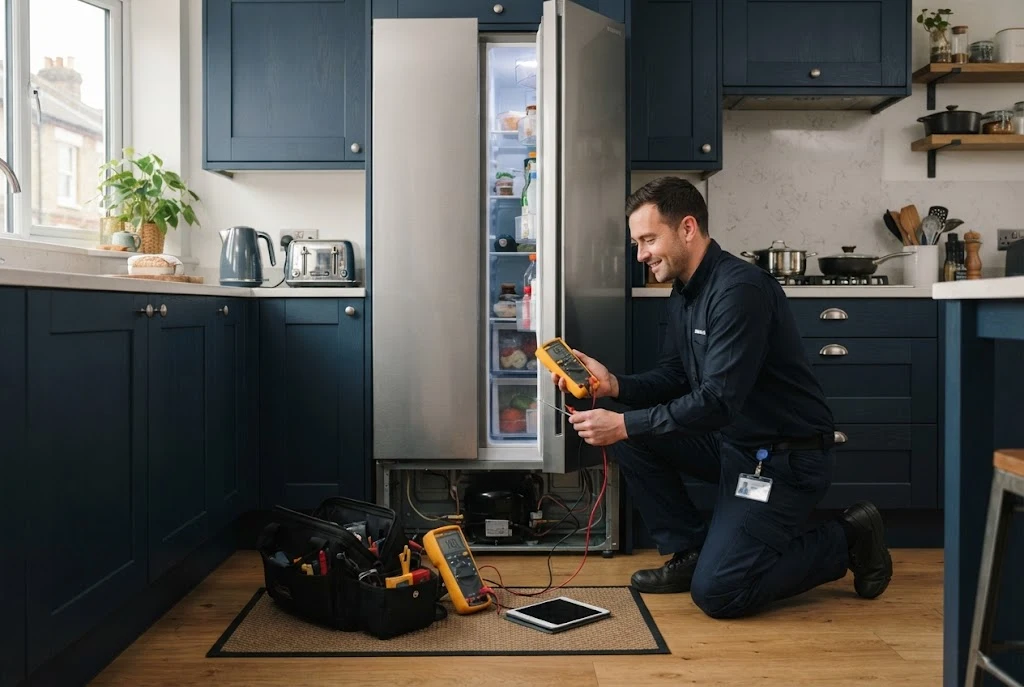
A reliable fridge repair service can help restore an essential household appliance when cooling problems, leaks, unusual noises or electrical faults develop. A refrigerator works continuously to keep food at a suitable temperature, so even a relatively small fault can quickly become a household concern. Understanding common fridge problems can help you identify when basic checks may be appropriate and when professional repair is the safer option.
For UK households, repairing a faulty fridge can sometimes be a practical alternative to immediate replacement. The right decision depends on the nature of the fault, the appliance’s age, its overall condition and the expected cost of repair. This guide explains common refrigerator problems, repair considerations and maintenance steps that can help keep domestic refrigeration equipment working effectively.
When Do You Need a Fridge Repair Service?
Not every refrigerator problem means the appliance has completely failed. Warning signs can include food becoming warmer than expected, excessive frost, water collecting inside the fridge, unusual noises, a continuously running compressor or a fridge that stops cooling altogether.
Some issues can be related to temperature settings, blocked airflow or poor ventilation. Others may involve thermostats, sensors, fans, seals, compressors or the refrigeration system itself. When the cause is not obvious, a professional fridge repair service can inspect the appliance and identify the likely source of the problem.
Because refrigeration systems can involve electrical components and specialist equipment, internal repairs should generally be carried out by an appropriately qualified technician rather than through trial-and-error DIY work.
Common Fridge Problems and Their Causes
Refrigerators can develop a variety of faults over time. The symptoms often provide useful clues, although accurate diagnosis may require professional testing.
Fridge Not Cooling Properly
A refrigerator that is not maintaining its expected temperature should be investigated promptly. Possible causes can include incorrect temperature settings, restricted airflow, a faulty fan, damaged door seals or a problem with the refrigeration system.
Start with basic checks such as confirming the temperature setting and ensuring that food is not blocking internal air vents. Also check that the appliance has adequate ventilation around the exterior according to the manufacturer’s installation requirements.
If the fridge continues to remain too warm, professional diagnosis may be necessary. Food safety should also be considered whenever a refrigerator cannot maintain an appropriate temperature.
Fridge Freezing Food
A refrigerator can sometimes become too cold and begin freezing food that should remain chilled. This may be caused by an incorrect temperature setting, restricted airflow, sensor problems or a thermostat-related fault.
Check the temperature setting first and make sure food is positioned correctly rather than directly against areas that become particularly cold. If the problem continues, a technician may need to inspect the temperature control system.
Fridge Making Strange Noises
Refrigerators naturally make some sounds as compressors, fans and other components operate. However, a sudden change in noise can indicate a developing problem.
Clicking, buzzing, rattling or grinding sounds may have different causes. Sometimes a refrigerator simply needs to be repositioned so it is stable and level. Persistent or unusually loud sounds should be investigated if they continue after basic checks.
Water Collecting Inside the Fridge
Water pooling inside a refrigerator can be caused by a blocked drainage channel, condensation or another issue affecting water management. Keeping the interior clean and ensuring that food does not obstruct drainage areas can help prevent some avoidable problems.
If water continues to accumulate despite cleaning the accessible drainage area according to the manufacturer’s instructions, professional assessment may be appropriate.
Excessive Frost or Ice Build-Up
Heavy frost can affect storage space and may interfere with normal cooling. The cause can vary depending on the refrigerator design and fault involved.
A damaged door seal can allow warm, moist air to enter the appliance. In other situations, problems with sensors, defrost systems or airflow may contribute to ice accumulation.
Fridge Repair and Cooling Performance
Cooling problems should not be ignored because a refrigerator is designed to maintain a stable environment for perishable food. If the appliance suddenly becomes warmer than normal, check the manufacturer’s recommended temperature setting and make sure the door is closing correctly.
It is also worth checking whether the appliance has adequate ventilation. Refrigerators generate heat while operating, and restricted external airflow can affect performance.
If these basic checks do not resolve the issue, arranging professional fridge repair can help identify whether the problem is related to the fan, thermostat, sensor, compressor or refrigeration system.
Fridge Repair Service Costs
The cost of refrigerator repairs varies significantly because different faults require different levels of labour and replacement parts. A simple component or seal replacement is unlikely to involve the same expense as a major refrigeration-system repair.
Factors that can affect the total repair cost include:
- The type and severity of the fault
- The fridge brand and model
- The parts required
- Engineer call-out charges
- Labour costs
- The complexity of diagnosis
- The age and condition of the appliance
- Availability of suitable replacement parts
Before approving a significant repair, ask for an explanation of the fault and an estimate of the expected cost. Comparing that figure with the appliance’s age and replacement value can help you make a practical decision.
Fridge Repair Services Near Me: What to Look For
When searching for fridge repair services near me, proximity is useful, but it should not be the only consideration. Refrigeration equipment can require specialist knowledge, so look for a provider with experience repairing the type of appliance you own.
Before booking, consider asking whether the provider works with your refrigerator brand, whether there is a diagnostic or call-out charge and whether parts and labour are covered by a repair guarantee.
A clear explanation of the problem and expected repair cost is also important. If a technician recommends replacing an expensive component, understanding the reason for the recommendation can help you decide whether the repair is worthwhile.
Fridge Freezer Repairs and Combined Appliances
Many UK households use fridge freezers rather than separate refrigerators and freezers. These appliances combine two storage environments, so a fault can affect either the refrigerator compartment, the freezer compartment or both.
Problems can include poor cooling, excessive ice, unusual noises, water leaks and temperature fluctuations. The exact cause depends on the appliance design and the symptoms involved.
When both sections are affected, specialist fridge freezer repairs may be required. If only one compartment appears to be affected, the technician can investigate whether the issue relates to airflow, temperature control or another component.
Households can also review information about appliance repair service when comparing professional repair options for different types of domestic appliances.
Refrigerator Repair Service for Cooling Faults
A refrigerator repair service may be required when basic checks do not resolve a persistent cooling problem. A technician can assess the appliance’s operating components and determine whether the fault can be repaired.
It is useful to provide the engineer with as much information as possible. Note when the problem started, whether the fridge is completely warm or simply less cold than normal and whether any unusual sounds or warning lights have appeared.
If your household also has a faulty washing machine, our guide to washing machine repair service covers common faults, repair considerations and maintenance.
When a Fridge Stops Cooling Completely
A refrigerator that suddenly stops cooling needs prompt attention. First, check whether the appliance has power and whether the plug, socket or circuit has an obvious issue that can be safely identified.
Check the temperature controls and make sure the doors are closing correctly. Also inspect the surrounding area to ensure that ventilation has not been obstructed.
If the refrigerator still does not cool, avoid repeatedly switching it on and off in an attempt to make it work. Professional diagnosis may be required, particularly if there are electrical symptoms, unusual smells or unusual compressor behaviour.
Because refrigeration faults can affect food storage, households should also take appropriate food-safety precautions if the appliance has been unable to maintain a safe temperature.
Domestic Fridge Repairs: Repair or Replace?
One of the most important decisions after a refrigerator breakdown is whether to repair the appliance or replace it. There is no universal answer because the calculation depends on the individual appliance.
Consider its age, condition, previous repair history and estimated repair cost. A relatively new refrigerator with a straightforward component fault may be a sensible candidate for repair. Conversely, an older appliance requiring an expensive major repair may need a more careful comparison with replacement options.
Energy use can also be considered when making a long-term household decision. An older refrigerator may operate differently from a newer, more efficient model, so compare the likely running costs alongside the purchase and repair costs.
Fridge Maintenance Tips for UK Homes
Regular maintenance can help reduce avoidable problems and support efficient operation. It cannot prevent every breakdown, but simple habits can make a difference.
Keep the Door Seal Clean
Inspect the door gasket periodically and keep it clean. A damaged or poorly sealing gasket can allow warm air to enter and make the refrigerator work harder.
Do Not Block Air Vents
Keep internal air vents clear so cold air can circulate properly. Avoid pushing food directly against vents unless the manufacturer’s instructions state otherwise.
Allow Adequate External Ventilation
Follow the manufacturer’s installation requirements for clearance around the appliance. Restricted ventilation can affect heat dissipation and overall performance.
Keep the Interior Clean
Regular cleaning helps maintain good appliance hygiene and makes it easier to identify leaks, frost build-up or other changes in condition.
Check the Temperature Setting
Make sure the refrigerator is set according to the manufacturer’s recommendations. An incorrect setting can sometimes look like a mechanical fault when the appliance itself is functioning normally.
Fridge Service and Preventive Maintenance
A professional fridge service can be useful when an appliance shows persistent performance changes or when a household wants a qualified technician to assess its condition.
Servicing is particularly useful when there are unexplained temperature fluctuations, repeated noises or other symptoms that do not have an obvious cause. Early diagnosis can sometimes prevent a developing problem from becoming more disruptive.
Maintenance should always follow the refrigerator manufacturer’s recommendations. Internal refrigeration components should not be opened or handled without the appropriate technical knowledge and equipment.
Refrigeration Repairs and Safety
Refrigeration systems combine electrical components with specialised cooling equipment. This means internal repairs are not generally suitable for inexperienced DIY work.
If you notice a damaged electrical cable, burning smell, significant water leak or other obvious safety issue, stop using the appliance safely and seek appropriate professional assistance.
Do not attempt to interfere with sealed refrigeration components simply to diagnose a cooling fault. A qualified technician can determine what testing and repair work is appropriate for the appliance.
Fridge Repair and Home Appliance Protection
Unexpected refrigerator failures can create an unplanned household expense, particularly when a major component requires replacement. Some homeowners therefore consider home appliance cover as part of their wider approach to managing breakdown costs.
Whether such protection is worthwhile depends on the specific policy, appliance age, exclusions, excesses and potential repair costs. Homeowners should compare the terms carefully rather than assuming every type of refrigerator breakdown is covered.
For households with several appliances, understanding different appliance protection options can also help with wider household budgeting.
Fridge Repair Service or Replacement?
When an appliance develops a significant fault, compare the repair estimate with the cost and expected lifespan of a suitable replacement. A repair can make sense when the refrigerator is otherwise in good condition and the fault is relatively straightforward.
Replacement may become more relevant when an older appliance has experienced repeated failures or requires an expensive repair. However, the decision should be based on the individual circumstances rather than age alone.
It is also worth considering whether the appliance is under a manufacturer’s warranty or another protection agreement before paying for independent repair work.
Related Appliance Repair Services
Refrigerators are only one part of a home’s appliance network. A household may also depend on washing machines, washer dryers, dishwashers and tumble dryers every day.
If you are dealing with a washing machine problem, see our guide to washing machine repair service. For combined washing and drying appliances, our washer dryer repair guide covers common washing and drying faults.
Dishwasher problems can also disrupt household routines. Our dishwasher repair service guide covers common dishwasher faults and maintenance considerations.
How to Prepare for a Fridge Repair Visit
Before an engineer arrives, record the refrigerator’s make and model if possible. Describe the symptoms clearly and note when the problem first appeared.
Useful information can include whether the fridge is completely warm, whether the freezer remains cold, whether the compressor appears to run continuously and whether there is unusual frost, water or noise.
Do not dismantle the appliance simply to investigate the fault. Providing clear observations is generally more useful than attempting an unfamiliar internal repair.
Final Thoughts
A dependable fridge repair service can help households deal with cooling faults, leaks, unusual noises and other refrigerator problems without immediately replacing the appliance. The first step is to identify the symptoms and carry out only safe, basic checks recommended by the manufacturer.
Professional diagnosis becomes particularly important when the problem involves electrical components, refrigeration systems or persistent cooling failure. Before approving a major repair, compare the expected cost with the appliance’s age, condition and replacement value.
Regular cleaning, appropriate ventilation, clear air circulation and attention to unusual changes in performance can also support better long-term appliance care. With sensible maintenance and timely professional assistance, UK households can make more informed decisions about repairing or replacing their refrigerators.
In the realm of home appliance maintenance, the fridge is not the only essential device that can face operational hurdles. Just as a malfunctioning refrigerator demands swift attention to prevent food spoilage, so too does a faulty oven require prompt and skilled intervention to ensure safe cooking practices. In the UK, the availability of professional support for various kitchen appliances is crucial, as the implications of neglecting repairs can extend beyond mere inconvenience to pose safety risks. For those experiencing issues with their cooking appliances, seeking out an oven repair service is vital to maintaining a fully functional kitchen and ensuring the safety of food preparation, complementing the measures taken for timely fridge repairs.
In addition to addressing immediate cooling issues, it’s crucial to consider the broader context of appliance management within the home. Many households rely on a suite of kitchen devices that work together to enhance efficiency and convenience. While opting for fridge repair can be a cost-effective solution, ensuring that all kitchen appliances are properly installed is equally important for optimal performance and longevity. Engaging a professional kitchen appliance installation service not only guarantees compliance with safety standards but also minimizes the risk of future malfunctions, thereby creating a seamless cooking and food preservation experience. This proactive approach can save homeowners from recurring repair costs and enhance the overall functionality of their kitchen environment.