

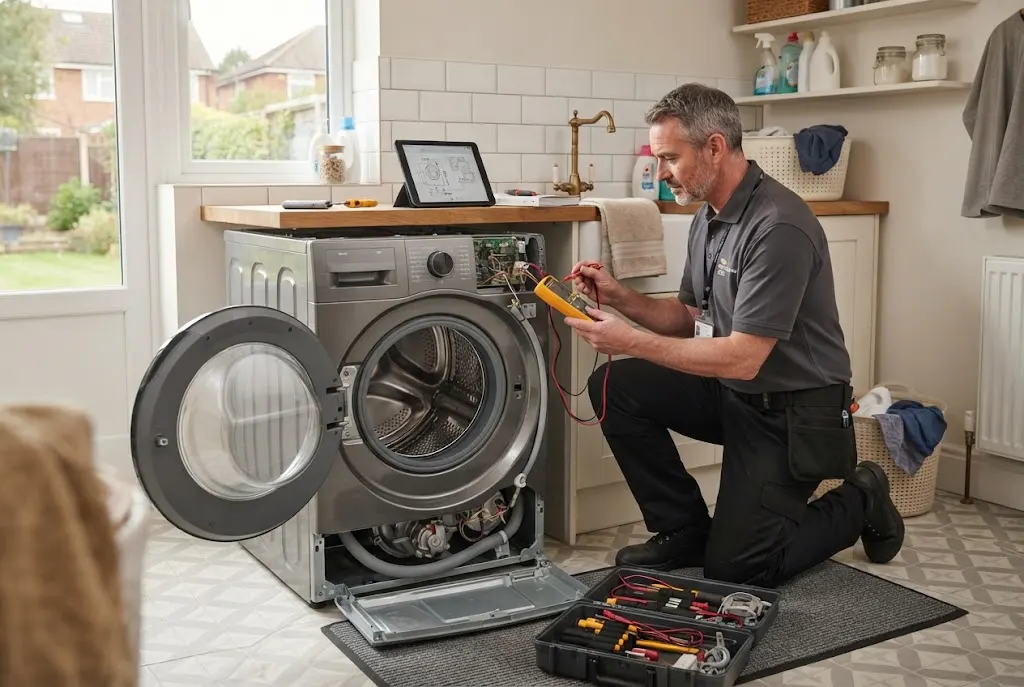
When a washer dryer stops working properly, washer dryer repair can often restore the appliance without the immediate cost of buying a replacement. Because a washer dryer combines washing and drying functions in one machine, diagnosing a fault can sometimes be more complicated than repairing a standalone appliance. Problems can affect the washing cycle, drying cycle, drainage, heating, spinning or electronic controls.
Understanding the most common washer dryer faults can help you identify when basic maintenance may be enough and when professional assistance is needed. It can also help you make a more informed decision about repair costs, servicing and replacement.
What Is Washer Dryer Repair?
Washer dryer repair involves diagnosing and fixing faults affecting a combined washing machine and tumble dryer. Depending on the problem, an engineer may need to inspect mechanical components, drainage systems, electrical parts, heating elements, sensors or electronic controls.
Because one appliance performs two functions, a fault does not necessarily mean the entire machine has failed. For example, the washing cycle may work normally while the drying function no longer produces warm air. Identifying exactly when the problem occurs is therefore an important part of the diagnostic process.
A professional appliance repair service can assess the appliance and determine whether a particular component can be repaired or replaced.
Common Washer Dryer Repair Problems
Washer dryers can develop many of the same faults found in conventional washing machines, along with problems specifically related to drying. The symptoms can provide useful clues about the possible cause.
Washer Dryer Not Draining
If water remains inside the drum after a wash cycle, the machine may have a drainage problem. A blocked filter, obstructed hose or faulty pump can prevent water from leaving the appliance correctly.
Check the manufacturer’s instructions before attempting to clean an accessible filter. If the appliance continues to retain water, professional diagnosis may be required.
Washer Dryer Not Spinning
A washer dryer may fail to spin because of an unbalanced load, excessive loading or a mechanical or electronic fault. Redistribution of laundry can sometimes resolve a simple imbalance.
If the machine repeatedly refuses to spin even with a suitable load, the problem may require professional inspection. Continuing to run the appliance repeatedly without identifying the cause can potentially make the fault worse.
Drying Function Not Working
One of the most frustrating problems is a washer dryer that washes normally but fails to dry clothes properly. Clothes may remain damp at the end of the drying cycle, or the appliance may fail to produce the expected heat.
Possible causes can include problems with heating components, sensors, airflow or electronic controls. Since these components can involve electrical systems, internal repairs should normally be handled by an appropriately qualified professional.
Washer Dryer Not Heating
When the drying cycle runs but clothes remain cold and wet, a heating-related fault may be involved. A damaged heating element or another component within the heating system can affect drying performance.
Heating faults are not generally suitable for trial-and-error DIY repairs. A professional can test the relevant components and determine whether replacement is practical.
Washer Dryer Leaking
Water around a washer dryer should be investigated promptly. Leaks can originate from hoses, seals, detergent compartments, connections or internal components.
A minor connection issue may sometimes be identifiable from an accessible area, but persistent or significant leaks should be assessed professionally. Water and electrical systems in the same appliance require particular care.
Washer Dryer Making Unusual Noises
Unexpected banging, grinding or rattling may indicate an unbalanced load or an object caught inside the appliance. Persistent mechanical noises can also point to worn or damaged components.
If the noise appears during spinning and continues after checking the load, stop relying on repeated cycles to see whether it disappears. Professional inspection can help identify the source before additional damage occurs.
Washer Dryer Repair Costs
The cost of washer dryer repair varies according to the fault, appliance model, replacement parts, labour and location. There is no universal repair price because a simple component replacement and a major mechanical repair require very different amounts of work.
Before agreeing to an expensive repair, ask for a clear explanation of the fault and the estimated total cost. It can also be useful to compare the expected repair expense with the appliance’s age, condition and replacement price.
Common factors affecting repair costs include:
- Type and severity of the fault
- Brand and model of the washer dryer
- Availability and price of replacement parts
- Engineer call-out and labour charges
- Complexity of the repair
- Whether the appliance requires specialist parts
- Any applicable warranty or service agreement
Washer Dryer Repairs: Repair or Replace?
When a combined appliance develops a serious fault, homeowners often have to decide whether to repair it or replace it. The cheapest immediate option is not always the most practical long-term choice.
Consider the appliance’s age and overall condition as well as the repair estimate. A relatively new washer dryer with one identifiable fault may be worth repairing. An older appliance that has already required several repairs may make replacement more attractive from a household budgeting perspective.
You should also consider how well the appliance has performed historically. A reliable machine with a straightforward fault can have a different repair outlook from one that has experienced repeated breakdowns.
Washer and Dryer Repair vs Separate Appliances
Washer dryers are attractive to households that want to save space because one appliance provides two functions. However, a fault can affect both washing and drying convenience at the same time.
Households with separate appliances may instead need a washer and dryer repair service when one or both machines develop problems. Separate appliances can also allow one function to remain available while the other is being repaired.
The right configuration ultimately depends on available space, household laundry requirements, appliance reliability and replacement costs.
Dryer Repair Service for Drying Problems
When the washing side of a washer dryer works correctly but drying does not, it can be useful to understand the types of problems that affect standalone dryers too.
A dedicated dryer repair service may deal with issues involving heating, airflow, sensors, motors or controls. Although a combined washer dryer has a different design, the underlying drying function can involve comparable areas of diagnosis.
For households using separate tumble dryers, professional tumble dryer repair may be appropriate when the appliance stops heating, fails to turn or develops unusual operating symptoms.
Washer Dryer Maintenance Tips
Regular maintenance can help reduce avoidable problems and keep a washer dryer operating effectively. It cannot prevent every mechanical or electrical failure, but simple care can support reliable operation.
Clean Accessible Filters
Follow the manufacturer’s instructions when cleaning filters. Lint, debris and small objects can interfere with drainage and appliance performance.
Do Not Overload the Drum
Respect the manufacturer’s load recommendations. The maximum load for washing may differ from the maximum load for drying, so check both specifications rather than assuming they are identical.
Use Suitable Detergent
Use detergent appropriate for the appliance and follow the recommended quantity. Excess detergent can contribute to residue and poor appliance hygiene.
Keep the Appliance Level
A washer dryer that is not positioned correctly can experience excessive movement and vibration during spinning. Check the installation guidance and make sure the appliance remains stable.
Clean the Door Seal
Regularly inspect and clean the door seal according to the manufacturer’s guidance. Moisture, lint and residue can accumulate in this area over time.
When to Call an Appliance Repair Service
Some maintenance tasks are suitable for homeowners, but internal repairs are different. Electrical components, heating systems, motors and other internal mechanisms should be assessed by someone with appropriate technical knowledge and qualifications.
Professional assistance is particularly important when the appliance has a burning smell, damaged electrical cable, significant water leak or repeated electrical fault. In these situations, stop using the appliance safely and arrange appropriate professional help.
An engineer can also be useful when the machine displays recurring error codes or behaves differently across multiple programmes. Accurate diagnosis can prevent unnecessary replacement of components.
How to Prepare for a Washer Dryer Repair Visit
Before contacting an engineer, gather as much useful information as possible. Record the appliance brand and model and note any error codes shown on the display.
Describe exactly what happens during the cycle. For example, does the machine fill with water but fail to drain? Does washing work while drying fails? Does the appliance stop after a particular amount of time?
If safe to do so, noting when unusual sounds, leaks or error messages occur can provide useful information during diagnosis.
Washer Dryer Servicing and Preventive Care
Regular dryer maintenance and general washer dryer care can help identify developing issues before they become major breakdowns. Maintenance should follow the manufacturer’s recommendations rather than relying on a generic schedule.
Pay attention to changes in drying performance, unusual vibration, drainage problems and changes in operating sounds. Early attention may allow a relatively manageable fault to be identified before it affects additional components.
For households concerned about the cost of unexpected appliance failures, it may also be useful to understand how home appliance cover works and what types of breakdown protection may be available.
Can Washer Dryer Problems Be Prevented?
Not every fault can be prevented. Components naturally wear over time, and electronic or mechanical failures can occur without obvious warning.
However, sensible use and regular care can reduce some avoidable problems. Avoid excessive loads, follow installation instructions, clean accessible filters and respond promptly to leaks, unusual noises and changes in performance.
Maintenance is particularly important for appliances that are used frequently. A busy household may put significantly more cycles through a washer dryer than a smaller household, making routine care even more valuable.
Choosing a Washer Dryer Repair Provider
When arranging professional repair, compare providers based on more than price. Ask whether the engineer has experience with your appliance brand and whether diagnostic, call-out and labour charges are clearly explained.
It is also useful to understand whether parts and labour are covered by a repair guarantee. Clear communication about the fault and estimated cost can make the repair process easier and reduce unexpected charges.
If you are dealing with a broader washing machine problem, our guide to washing machine repair service covers common washing machine faults, servicing considerations and repair decisions.
Final Thoughts
Washer dryer repair can be a practical solution when a combined appliance develops a fault. Problems with drainage, spinning, heating, drying, leaks and unusual noises can have different causes, so identifying the exact symptom is an important first step.
Routine maintenance can help support reliable operation, while professional diagnosis is appropriate for complex mechanical and electrical problems. Before committing to a major repair, compare the expected cost with the appliance’s age, condition and replacement value.
With sensible maintenance and timely professional assistance, households can often make better decisions about whether to repair, service or eventually replace a washer dryer.
As you navigate the complexities of washer dryer repair, it’s essential to recognize that these appliances are just one facet of a larger ecosystem of domestic machines that require attention and expertise. Understanding the intricacies of appliance repair can empower homeowners to make savvy decisions not only about their washer dryers but also regarding other crucial appliances in their households. For instance, issues with fridges, dishwashers, and other white goods can arise unexpectedly, often necessitating professional intervention. A comprehensive understanding of how to approach these repairs can enhance your overall efficiency and reduce costs. Engaging with specialists in white goods repairs ensures that you are well-equipped to tackle any appliance malfunction, preserving the longevity and functionality of your home’s essential equipment.