

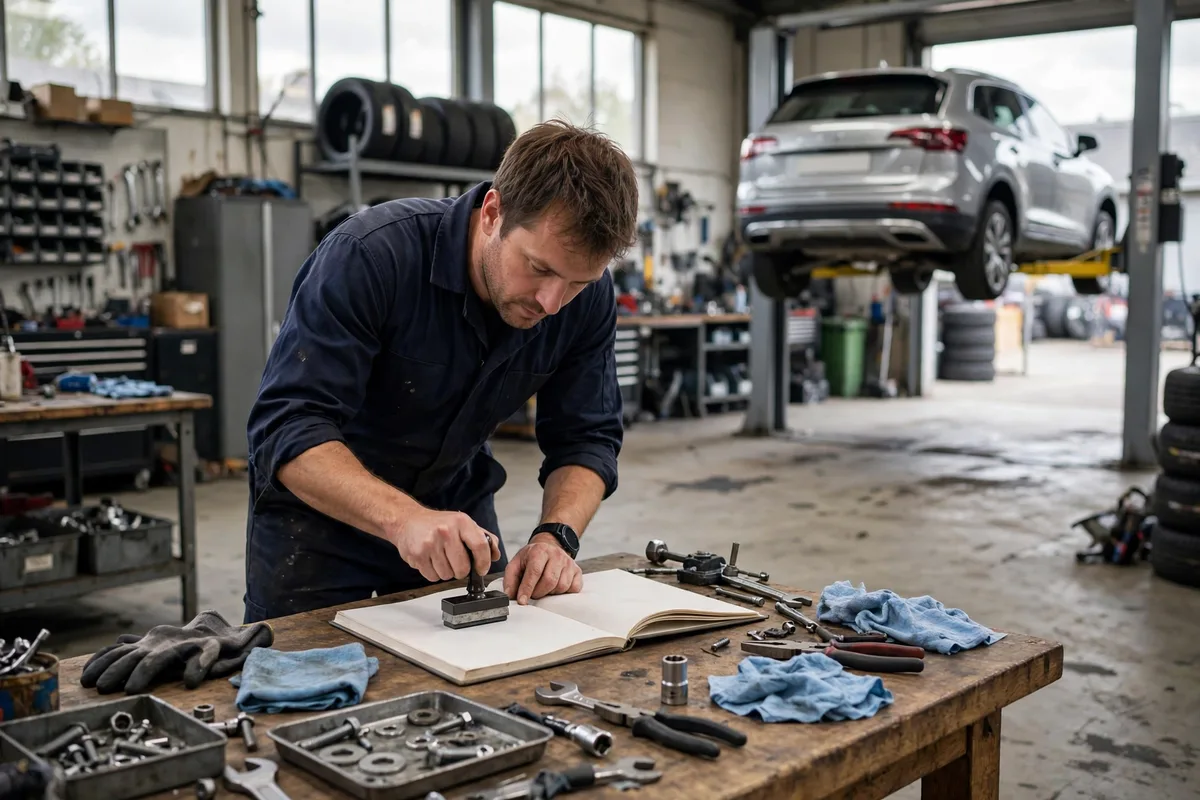
Every car keeps two values: the one you feel when you drive it, and the one someone else will pay for it when you sell. A complete service history quietly protects both. It is easy to dismiss the little stamped book in the glovebox as paperwork, yet few things you do as an owner repay you so consistently. Skipping services to save a few pounds this year often costs far more later, in bigger repair bills, awkward questions from buyers and, in some cases, problems with a manufacturer warranty. This guide explains how a full service history saves you money in ways that are not always obvious.
What Counts as a Full Service History?
A full service history means the car has been serviced at the intervals the manufacturer recommends, with records to prove it. Those records might live in a traditional stamped service book, in a digital service record held by the manufacturer, or in a tidy folder of invoices from independent garages. What matters is the evidence: dates, mileages, the work carried out and who did it. A partial history, with gaps or missing years, still helps, but the strongest savings come from a complete, unbroken record that a future buyer or warranty administrator can follow without guesswork.
How a Service History Protects Your Resale Value
When two otherwise identical cars sit side by side on a forecourt, the one with a documented history is simply easier to trust. Buyers cannot see inside an engine, so they buy evidence instead. A car with a full service history usually sells faster and for more than the same model with a patchy record, because the buyer is paying for reduced risk. Dealers know this, which is why part-exchange valuations often drop the moment the service book cannot be produced. Keeping every stamp and invoice is, in effect, keeping a slice of your car’s value in a folder at home.
Regular Servicing Catches Small Problems Early
The second saving is less visible but just as real. A service is not only an oil change; it is an inspection. Worn brake pads, a perishing belt, a slow coolant leak or tired suspension bushes are all far cheaper to fix when a technician spots them early than after they fail on the road. Drivers who follow sensible MOT and service routines without overspending tend to face fewer of the big, frightening bills that arrive without warning. In that sense, servicing works like insurance you actually use: a modest, planned cost that replaces a much larger unplanned one.
Warranties, Recalls and Goodwill
If your car is still under a manufacturer warranty, servicing on schedule is usually a condition of keeping that cover valid. Miss an interval and a claim for a major failure can be challenged, leaving you to pay for repairs the warranty should have covered. Even after the warranty ends, manufacturers sometimes make goodwill contributions towards known faults, and a loyal, documented service record strengthens your case considerably. Hybrid and electric models are no different: following the maker’s schedule for hybrid servicing or battery health checks keeps the paperwork that supports any future claim.
The Checks That Quietly Save You Money
Some of the most valuable service items are unglamorous. Fresh oil protects the engine from premature wear. Correct tyre pressures and alignment reduce fuel use and stop tyres scrubbing out early; our guide to wheel alignment and how it saves tyres and money explains why a small adjustment can extend tyre life significantly. Brake fluid, coolant and filters all degrade with time rather than mileage alone, which is why low-mileage cars still need servicing on schedule. None of these jobs is expensive in isolation, yet together they prevent the kind of wear that quietly turns a reliable car into a money pit.
Main Dealer or Independent Garage?
A common worry is that servicing outside the dealer network destroys value. In practice, what matters most is that the work is done properly, on time, with quality parts and a clear invoice. Many owners use main dealers while the car is under warranty, then move to a trusted independent specialist afterwards. Comparing the approach of garage chains and what they offer with local independents can help you find the right balance of price and reassurance. Keep every invoice, note the mileage at each visit, and make sure digital records are updated where your car has them. Electric car owners can apply the same logic: the routine for EV servicing differs from a petrol car, but the principle of documented, on-time care is identical.
Simple Habits That Keep the Record Strong
- Service on time, not just on mileage, especially if you do mostly short trips.
- Keep invoices, MOT certificates and receipts together, in date order.
- Ask the garage to record the mileage and any advisories on every invoice.
- Act on advisories promptly and keep proof that the work was done.
- If you buy a used car, file its existing history safely from day one.
None of this requires mechanical knowledge or much effort. It simply treats your car’s paperwork as part of the car itself.
If Your Service Book Is Missing
Do not despair if you have bought a car with gaps in its paperwork. Service history can often be partly rebuilt. Main dealers can usually check whether the car was serviced within their network and may provide printouts of the work recorded against it. The free online MOT history service shows test dates, mileages and failures going back years, which at least proves the car was on the road and maintained enough to pass. Previous garages may also confirm visits if you can identify them from old stickers or invoices left in the car. A reconstructed file is never quite as strong as an unbroken book, but it is far better than nothing when you come to sell.
The Bottom Line
A full service history saves money three times over: it prevents small faults becoming expensive failures, it keeps warranties and goodwill claims alive, and it returns cash to you at resale time in the form of a stronger price and a quicker sale. Few motoring habits offer that kind of return for what is, in the end, a bit of organisation. Keep the book stamped, keep the invoices safe, and your car will keep more of its value for longer.