

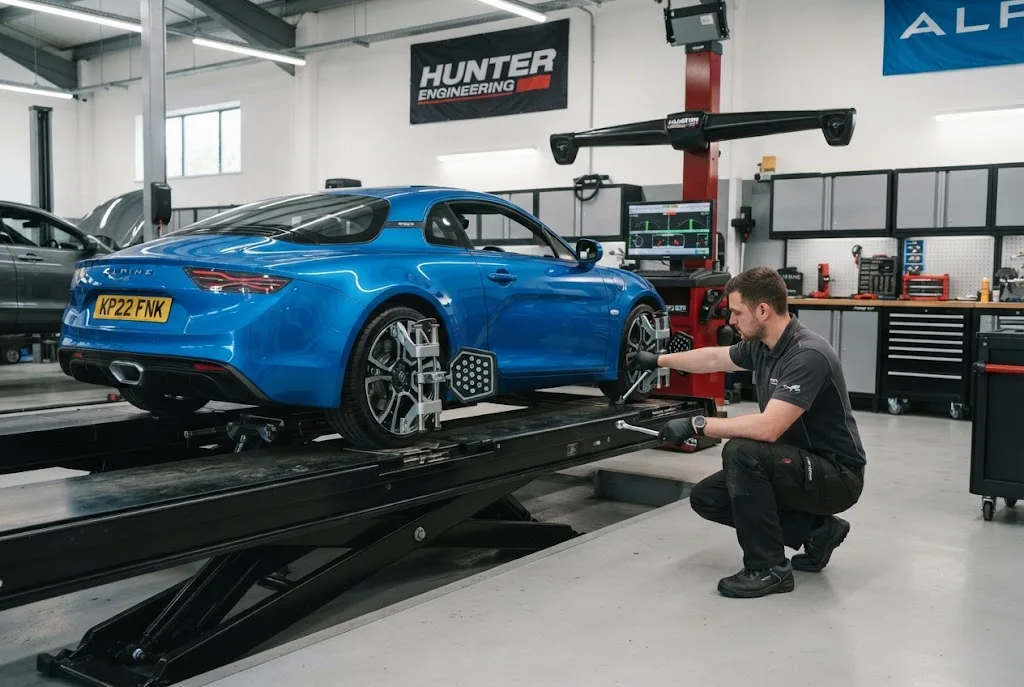
Wheel alignment is an important part of vehicle maintenance that can affect tyre wear, steering behaviour, handling and overall driving comfort. When the wheels are not correctly aligned, a car may pull to one side, develop uneven tyre wear or feel less stable on the road.
Correct alignment can also help protect your budget. If tyres wear unevenly because of an alignment problem, replacing them earlier than necessary can add avoidable expense. Understanding the signs of poor alignment and knowing when to have the vehicle checked can therefore support both safe driving and sensible maintenance spending.
What Is Wheel Alignment?
Wheel alignment involves adjusting the angles of the wheels so they match the vehicle manufacturer’s specified settings. These angles influence how the tyres meet the road and how the vehicle responds to steering inputs.
Alignment is commonly discussed in terms of settings such as toe, camber and caster. The exact specifications vary between vehicles, so a proper alignment check should use the appropriate measurements for the particular make and model.
Wheel alignment is different from wheel balancing. Alignment concerns the positioning and angles of the wheels relative to the vehicle, while balancing addresses the distribution of weight around a wheel and tyre assembly.
Wheel Alignment and Tyre Wear
One of the clearest reasons to pay attention to alignment is tyre wear. If the wheels are positioned incorrectly, the tyres may not make the intended contact with the road.
This can result in uneven wear across the tread. Instead of wearing relatively evenly, one side or section of a tyre may deteriorate faster than the rest.
Uneven tyre wear can shorten tyre life and force you to replace tyres sooner. Because a full set of quality tyres can represent a significant expense, correcting an alignment problem can help protect your maintenance budget.
Signs of Uneven Wear
Check your tyres periodically for unusual patterns. If one edge appears significantly more worn than the rest of the tread, or if the tyres on the same axle are wearing differently, an inspection may be worthwhile.
Tyre wear can have several causes, including incorrect pressure, suspension problems, driving conditions and alignment issues. That is why replacing a worn tyre without investigating the cause may not solve the underlying problem.
Signs You May Need Wheel Alignment
Several driving symptoms can indicate that your vehicle needs an alignment check.
- The car consistently pulls to the left or right on a suitable, reasonably level road.
- The steering wheel appears off-centre when driving straight.
- Tyres show unusual or uneven wear.
- The vehicle feels less stable than usual.
- Steering behaviour has changed after hitting a pothole or kerb.
- The vehicle has recently had suspension or steering components replaced.
These symptoms do not automatically prove that alignment is the cause. A qualified technician should inspect the vehicle to determine whether alignment, tyres, suspension or another component is responsible.
Why Potholes Can Affect Alignment
UK roads can expose vehicles to potholes, raised surfaces and kerbs. A significant impact can alter wheel alignment or damage components connected with the steering and suspension system.
You may not notice an immediate problem after hitting a pothole. However, if the vehicle subsequently begins pulling to one side or the steering wheel no longer sits straight, an inspection can help identify whether anything has moved or been damaged.
It is particularly sensible to investigate a noticeable change in handling rather than assuming that the vehicle will return to normal by itself.
Wheel Alignment vs Wheel Balancing
Wheel alignment and wheel balancing are often confused because both involve wheels and tyres, but they address different problems.
Balancing involves correcting uneven weight distribution in the wheel and tyre assembly. An imbalance can contribute to vibration, particularly at certain speeds.
Alignment, meanwhile, concerns the angles and positioning of the wheels. Alignment problems are more commonly associated with pulling, an off-centre steering wheel and uneven tyre wear.
A vehicle can therefore have a balancing problem, an alignment problem or both. The appropriate service depends on the symptoms and inspection results.
How Wheel Alignment Protects Your Budget
Vehicle maintenance costs can increase when small problems are allowed to develop. Alignment is a good example because the immediate issue may appear minor while the longer-term effect can be more expensive tyre wear.
Correct alignment can help tyres wear more evenly. When tyres last closer to their expected service life, owners may be able to avoid replacing them prematurely.
Alignment can also be part of a wider maintenance strategy. If a vehicle has developed uneven tyre wear, checking alignment alongside tyre pressure, suspension and steering components can provide a more complete picture of the problem.
When Should You Check Wheel Alignment?
There is no single universal interval that applies to every vehicle and every driving environment. Instead, alignment should be checked when symptoms appear or when circumstances increase the likelihood of an alignment issue.
Consider an inspection after a significant pothole or kerb impact, after certain suspension or steering repairs, or when unusual tyre wear becomes visible.
Some motorists also choose to have alignment checked when fitting new tyres. This can be useful when existing tyres show uneven wear because new tyres will not necessarily resolve the underlying alignment problem.
Wheel Alignment and Suspension Checks
Alignment should not always be treated as an isolated service. The steering and suspension systems affect how the wheels are positioned and how the vehicle behaves on the road.
Worn or damaged suspension components can prevent alignment settings from remaining correct. If a garage identifies an alignment problem, ask whether the technician has also checked for related mechanical issues.
This is particularly important if the vehicle has unusual handling symptoms, excessive tyre wear or a history of impacts.
Choosing a Garage for Alignment Work
Not every automotive service provider offers exactly the same alignment equipment or service capability. When choosing a garage, ask whether it provides four-wheel alignment where appropriate for your vehicle and whether the equipment is suitable for the car’s specifications.
It is also useful to compare service quality, customer reviews and pricing. The cheapest alignment check is not necessarily the best value if the garage cannot properly diagnose or correct the issue.
Our guide to automotive service companies explains how to compare national providers, independent garages and specialist workshops before booking vehicle maintenance.
What Happens During an Alignment Check?
A typical alignment service involves measuring the wheel angles and comparing the readings with the vehicle’s specified settings. If adjustments are possible and necessary, the technician can make the appropriate corrections.
The exact process varies depending on the vehicle and the equipment used by the garage. Some modern systems use computerised alignment equipment to measure wheel geometry accurately.
If significant mechanical wear is discovered, alignment may not be the only work required. A worn steering or suspension component may need attention before correct alignment can be maintained.
Does Alignment Improve Fuel or Energy Efficiency?
Correct alignment can help ensure that the tyres are interacting with the road as intended. A vehicle with an alignment problem may experience increased tyre scrub or rolling resistance, although the effect on fuel or energy consumption depends on the severity of the issue and other driving factors.
For electric and hybrid vehicles, efficient tyre maintenance is also relevant because rolling resistance can influence energy use. Owners of electrified vehicles can learn more about specialist maintenance through our guides to hybrid servicing and EV servicing.
What About Steering Alignment?
The term steering alignment is sometimes used when discussing wheel alignment because steering behaviour can reveal an alignment issue. However, the underlying service concerns the relationship between the vehicle’s wheels and suspension geometry.
A steering wheel that is off-centre can be a useful warning sign, but it should not be assumed that simply repositioning the steering wheel will solve the problem. Proper diagnosis should identify why the steering is not behaving as expected.
Can New Tyres Fix an Alignment Problem?
New tyres can improve grip and handling when existing tyres are worn, damaged or unsuitable. However, replacing tyres does not correct an underlying alignment problem.
If the old tyres have developed uneven wear, fitting new tyres without investigating the cause could allow the same wear pattern to return.
For this reason, motorists replacing tyres should pay attention to the condition of the old set. Unusual wear can provide useful information about alignment, inflation or suspension issues.
How to Reduce Alignment-Related Maintenance Costs
Preventive checks can help limit unnecessary expenses. Monitor tyre pressures, inspect tread condition and pay attention to changes in steering or handling.
After a significant impact, do not ignore new symptoms simply because the car remains driveable. A relatively straightforward inspection can help determine whether alignment or another component needs attention.
When an alignment issue is identified, ask the garage whether there are any underlying suspension or steering problems. Fixing the root cause can be more effective than repeatedly correcting the alignment without addressing the component responsible.
Wheel Alignment for Safer, More Predictable Handling
Correct alignment is not simply about protecting tyres. The way a vehicle responds to steering inputs and maintains its intended path also matters to driving stability.
If a vehicle suddenly pulls to one side, feels unstable or develops unusual steering behaviour, arrange an appropriate inspection. Other faults can produce similar symptoms, so professional assessment is preferable to guessing the cause.
Keeping the steering and suspension system in good condition can contribute to predictable vehicle behaviour and help identify problems before they become more serious.
Final Thoughts on Wheel Alignment
Wheel alignment is a relatively straightforward part of vehicle maintenance, but its effect on tyre wear, steering behaviour and long-term costs can make it worth taking seriously.
Watch for uneven tyre wear, an off-centre steering wheel, pulling to one side or changes in handling. If any of these symptoms appear, have the vehicle inspected rather than assuming that new tyres alone will solve the problem.
A good alignment service should be combined with appropriate checks of tyres, steering and suspension where necessary. Choosing a competent provider and addressing problems early can help protect your tyres, support predictable handling and reduce avoidable maintenance expenses.
For official UK guidance on keeping vehicles safe and roadworthy, motorists can consult GOV.UK vehicle safety guidance.
For more practical advice on servicing, repairs and vehicle maintenance, explore our Auto Services category.