

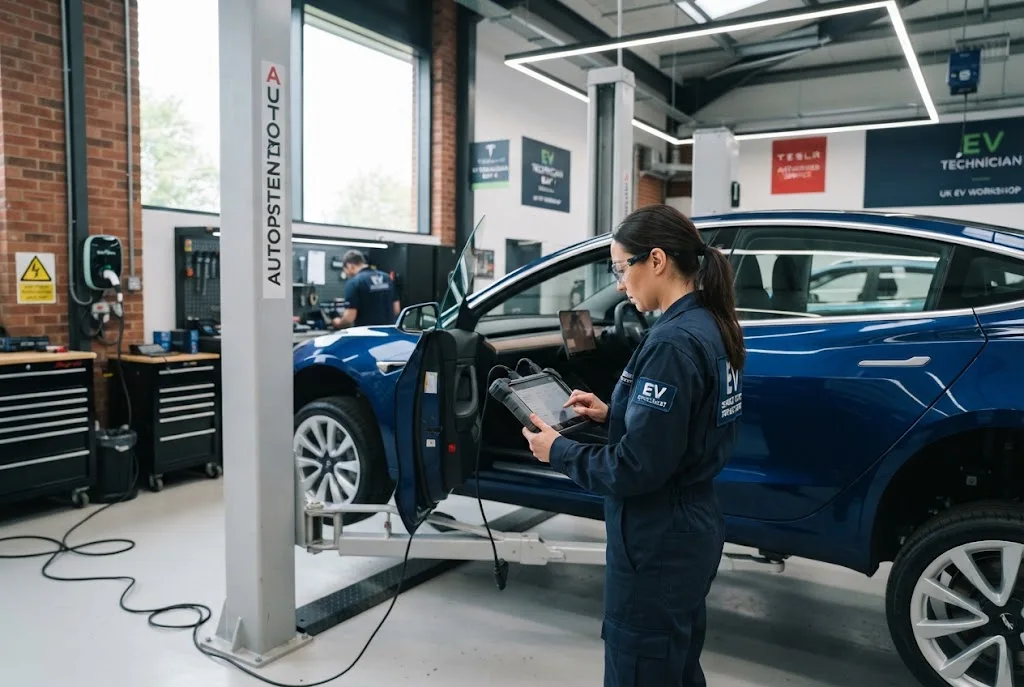
EV servicing is an important part of owning an electric vehicle, even though battery-powered cars generally have fewer conventional mechanical components than petrol or diesel vehicles. Electric cars still need regular inspections and maintenance covering tyres, brakes, suspension, steering, fluids, charging equipment and other safety-critical components.
Understanding what an electric vehicle actually needs can help owners avoid unnecessary work while ensuring important maintenance is not overlooked. The right garage can also make a difference, particularly when specialist diagnostics, high-voltage systems or battery-related checks are involved.
What Is EV Servicing?
EV servicing refers to the inspection and maintenance of a fully electric vehicle. Unlike a conventional car, an EV does not have an internal combustion engine, engine oil or many of the components associated with exhaust systems and traditional engine maintenance.
However, an electric vehicle is still a road vehicle with tyres, brakes, suspension, steering, lights, cooling systems and electronic components that require attention.
The exact maintenance schedule depends on the manufacturer and model. Owners should therefore follow the recommended service intervals for their particular vehicle rather than assuming that every EV needs the same checks.
EV Servicing: What Does an Electric Car Need?
Electric vehicle maintenance is often different from traditional servicing, but it is not the same as having no maintenance requirements.
Tyres
Tyres remain one of the most important maintenance items on an EV. Electric vehicles can be relatively heavy because of their battery packs, while instant electric torque can also influence how tyres are used.
Regularly checking tread depth, tyre pressure and wear can help maintain handling and efficiency. Uneven wear may also indicate alignment or suspension issues that should be investigated.
Brakes
Regenerative braking allows an electric vehicle to recover energy during deceleration. Depending on the vehicle and driving conditions, this can reduce how frequently conventional friction brakes are used.
That does not mean brake maintenance can be ignored. Brake discs, pads, calipers and other components still require inspection. A vehicle that is driven infrequently or relies heavily on regenerative braking can also require attention to brake condition over time.
Suspension and Steering
Suspension and steering components perform the same fundamental safety functions regardless of whether the vehicle is electric or petrol-powered.
Knocking sounds, unusual handling, steering changes or uneven tyre wear should be investigated. A garage may recommend additional checks if these symptoms appear during a routine inspection.
Fluids and Cooling Systems
EVs do not need engine oil, but they can still use other fluids. Depending on the model, these can include brake fluid and coolant for thermal management systems.
Battery and power electronics cooling systems are particularly important because maintaining suitable operating temperatures supports the performance and longevity of electrical components.
Why EV Mechanics Need Specialist Knowledge
One of the biggest differences between EVs and conventional cars is the presence of high-voltage electrical systems. These systems require appropriate safety procedures, equipment and technician knowledge.
Not every general garage will offer the same level of EV support. When comparing automotive service providers, ask whether the workshop has technicians trained to work safely with high-voltage vehicle systems.
This becomes especially important when a problem involves the traction battery, inverter, charging system or other high-voltage components.
Electric Vehicle Maintenance vs Petrol Car Maintenance
Electric vehicles can have fewer routine mechanical maintenance requirements because they do not use an internal combustion engine. There is no engine oil to replace, and many exhaust-related components found on conventional vehicles are absent.
However, EVs still require maintenance across other areas. Tyres, brakes, suspension, steering, lights, windscreen systems and the vehicle’s electrical architecture all remain relevant.
The difference is therefore better described as a change in maintenance requirements rather than the complete elimination of servicing.
EV Battery Servicing and Maintenance
The traction battery is one of the most valuable components in an electric vehicle. Modern EVs use sophisticated battery management systems to monitor and control the battery’s operation.
Battery servicing does not normally mean opening or repairing the battery pack during every routine service. Instead, appropriate checks may involve diagnostics, system monitoring and inspection for faults depending on the vehicle manufacturer’s requirements.
Battery-related warnings should always be taken seriously. If an EV displays a warning relating to its high-voltage system or battery, arrange an assessment with a suitably qualified provider.
Charging Infrastructure Checks
Charging is another important part of EV ownership. While home charging equipment is separate from many routine vehicle service tasks, problems with charging can sometimes require investigation of the vehicle’s charging system.
If an EV repeatedly fails to charge, charges unusually slowly or displays charging-related warnings, the vehicle should be assessed rather than repeatedly attempting to solve the problem without identifying the cause.
Owners using home charging equipment should also follow the equipment manufacturer’s instructions and ensure that electrical installation work is carried out by appropriately qualified professionals.
Can EV Servicing Save Money?
Electric vehicles can have different maintenance cost profiles from petrol and diesel cars. The absence of an engine and several conventional mechanical systems can reduce the number of routine maintenance tasks.
However, EV ownership does not eliminate repair costs. Tyres, brakes, suspension, air conditioning, charging components and electronic systems can still require maintenance or replacement.
The best way to achieve maintenance savings is therefore to follow the manufacturer’s schedule, address faults early and choose a garage that understands the vehicle.
How to Find Affordable EV Ownership
Affordable EV ownership involves more than looking for the cheapest service. A low-cost workshop that lacks the appropriate equipment for your vehicle may create additional expense if a fault is incorrectly diagnosed or specialist work has to be repeated elsewhere.
When comparing EV mechanics and service providers, consider:
- Experience with your EV make and model
- Technician training for high-voltage systems
- Availability of suitable diagnostic equipment
- Services offered for battery and charging systems
- Customer reviews and service quality
- Parts and labour warranty information
- Total quoted cost
- Location and appointment availability
For a wider comparison of garages, see our guide to automotive service companies.
EV Servicing at Independent Garages
Independent garages can be a useful option for EV owners, particularly as the number of electric vehicles on UK roads continues to grow. However, owners should check the garage’s EV capabilities before making an appointment.
Ask whether technicians are trained for high-voltage work and whether the garage has suitable diagnostic equipment. It is also worth asking whether the workshop regularly services your particular vehicle brand.
A specialist independent provider may offer competitive pricing while still providing the expertise needed for the vehicle. The key is to compare capability and service quality rather than assuming that independent always means cheaper or that a national provider is automatically better.
How Often Should an EV Be Serviced?
There is no single service interval that applies to every electric vehicle. Manufacturers specify their own maintenance schedules based on the model and its systems.
Some EVs may have longer intervals than conventional cars, while others may request periodic inspections of particular components. Digital service reminders and the owner’s manual can help determine when maintenance is due.
Following the manufacturer’s recommendations is preferable to creating an informal schedule based on assumptions about EVs requiring less maintenance.
Warning Signs Your EV Needs Attention
Electric vehicles can provide warning messages when a system detects a problem. These warnings should not be ignored simply because the car continues to drive normally.
Other reasons to arrange an inspection can include unusual noises, changes in braking behaviour, unexpected reductions in range, charging problems, steering changes or warning lights.
A sudden change in driving performance can have several possible causes, so professional diagnostics are generally more useful than guessing which component may be responsible.
Tyres, Alignment and EV Running Costs
Tyre condition can have a noticeable effect on the driving experience of an EV. Incorrect tyre pressure, uneven wear or alignment problems can affect handling and may increase rolling resistance.
If you notice uneven tread wear or the car pulling to one side, consider arranging a wheel alignment inspection. Correct alignment can help protect tyres and address certain handling problems before they become more expensive.
Keeping tyres correctly inflated and checking their condition regularly is a simple part of managing electric vehicle maintenance.
Should You Use a Main Dealer for EV Servicing?
A main dealer can be useful for owners who want manufacturer-specific expertise, particularly when the vehicle is relatively new or requires complex diagnostic work.
However, a reputable independent EV specialist may also be suitable for routine maintenance depending on the vehicle, the manufacturer’s requirements and the garage’s capabilities.
Compare what each provider actually includes. Look at the service schedule, diagnostic checks, technician expertise, warranty implications and total cost rather than choosing based solely on the type of business.
How to Reduce Unnecessary EV Maintenance Costs
Preventive care is one of the simplest ways to control maintenance expenses. Check tyre pressures regularly, pay attention to warning messages and follow the vehicle’s service schedule.
Do not postpone safety-related repairs because a vehicle appears to be driving normally. At the same time, ask for an explanation and quotation before authorising additional non-urgent work.
Keeping records of servicing and repairs can also help prevent unnecessary replacement of components that have recently been inspected or replaced.
EV Servicing and Long-Term Electric Car Ownership
Electric vehicles can be relatively straightforward to maintain when owners understand the difference between conventional servicing and EV-specific maintenance.
The absence of an engine and exhaust system can reduce some routine maintenance requirements, but the vehicle still depends on tyres, brakes, suspension, cooling systems, charging equipment and sophisticated electronic components.
Good maintenance is therefore about understanding the vehicle rather than simply reducing the number of garage visits.
Final Thoughts on EV Servicing
EV servicing is an essential part of maintaining an electric vehicle safely and reliably. Although EVs can require less traditional mechanical maintenance than petrol or diesel cars, they still need regular inspections and specialist attention when high-voltage or battery-related systems are involved.
Choosing the right garage can help control costs while ensuring that important work is completed correctly. Compare EV mechanics based on training, equipment, experience, reviews, service quality and total pricing.
With appropriate maintenance, careful attention to tyres and brakes, and prompt investigation of warning signs, owners can support affordable EV ownership while getting more from their electric vehicle over the long term.
For official UK guidance on vehicle safety and roadworthiness, motorists can consult GOV.UK vehicle safety guidance.
For more practical guidance covering vehicle maintenance and repair, explore our Auto Services category.
As electric vehicles gain traction on the roads, understanding their specific maintenance needs becomes increasingly important for optimizing performance and longevity. Among the various aspects of EV upkeep, proper maintenance of the vehicle’s alignment is crucial, as misalignment can lead to uneven tyre wear and compromised handling. Ensuring that your EV is correctly aligned not only enhances driving safety but also reduces long-term costs associated with premature tyre replacement. For those looking to deepen their knowledge of this essential maintenance practice, exploring the benefits of wheel alignment can provide valuable insights into how such preventative measures can preserve both the vehicle’s integrity and the owner’s wallet. Ultimately, a proactive approach to servicing can significantly enhance the driving experience and contribute to cost savings over time.
As electric vehicles continue to gain traction in the UK market, understanding the nuances of their maintenance becomes increasingly vital for owners looking to optimize costs. While EVs generally demand less frequent servicing compared to their petrol and diesel counterparts, the unique components involved—such as high-voltage systems and specialized diagnostic checks—necessitate a tailored approach to upkeep. This is where strategic planning can play a pivotal role. By integrating insights from resources dedicated to managing vehicle maintenance expenses, such as comprehensive guides on MOT and service, EV owners can not only ensure compliance with safety regulations but also safeguard their investment against unexpected costs. Such foresight in planning can lead to a more economical and efficient ownership experience, ultimately enhancing the long-term viability of electric vehicles on UK roads.