

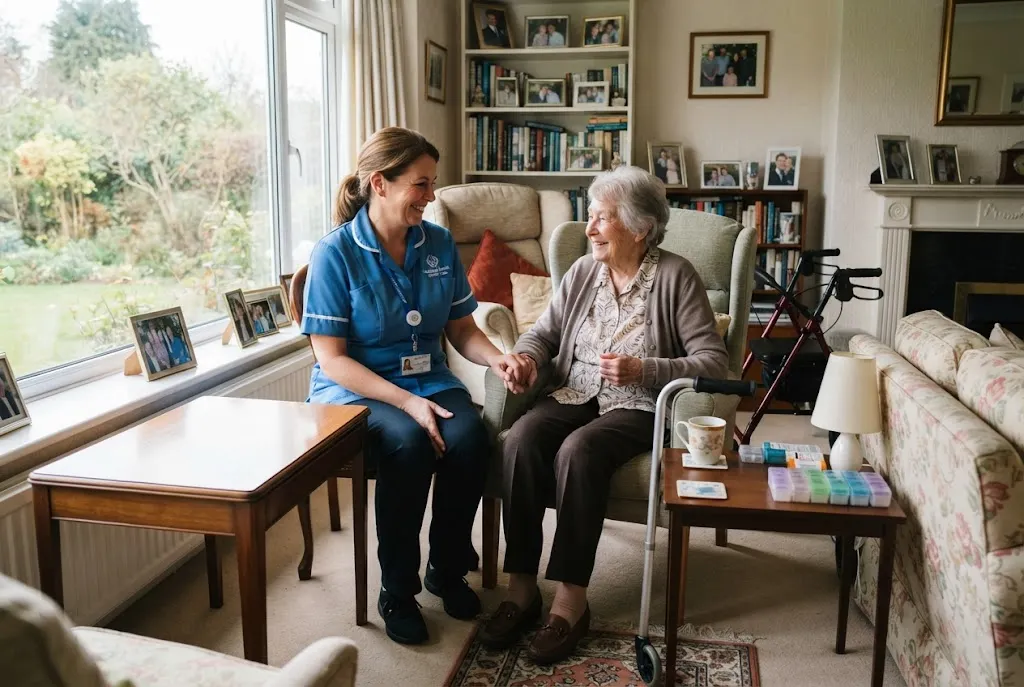
Elderly care at home can help older people continue living in familiar surroundings while receiving support with everyday activities, personal care, companionship or more specialist needs. For many families, it offers a flexible alternative to moving immediately into a residential care setting.
The right arrangement depends on the person’s health, mobility, independence, home environment and preferences. Some older people may only need occasional assistance, while others require several visits each day or more intensive support. Understanding the available options can make it easier to choose appropriate care and plan for the costs.
What Is Elderly Care at Home?
Elderly care at home refers to professional or informal support provided to an older person in their own residence. Professional carers may visit at agreed times to help with personal care, meals, household tasks, mobility, companionship and other activities included in the care plan.
The level of assistance can change over time. Someone might initially need help with shopping or household tasks, then later require support with washing, dressing or mobility. A flexible care arrangement can be reviewed as circumstances change.
Home care does not necessarily mean that a person requires intensive assistance. The aim is to provide the appropriate level of support while allowing the individual to maintain as much independence as possible.
Why Choose Elderly Care at Home?
Remaining at home can be an attractive option when an older person can live safely with appropriate support.
Familiar Surroundings
Home is often associated with familiar routines, possessions, neighbours and memories. Staying in a known environment can be particularly important to someone who has lived in the same property for many years.
Greater Routine and Familiarity
Care visits can be arranged around an existing daily routine. An older person may receive assistance with getting up, preparing meals, personal care or getting ready for bed without having to follow a completely different residential schedule.
Personalised Support
Care at home can be structured around individual needs. Instead of receiving a standard package, the care plan can identify the person’s preferences, priorities and specific difficulties.
Family Involvement
Professional carers can work alongside family members. Relatives may continue helping with shopping, appointments or social activities while trained carers provide agreed professional support.
What Types of Elderly Care Are Available at Home?
Older people have very different needs, so home care can take several forms.
Personal Care
Personal care can include assistance with washing, bathing, dressing, toileting and other essential daily activities. The amount of help required varies from person to person.
Home Help
Practical assistance can include meal preparation, laundry, light household tasks and shopping. This can be useful when reduced mobility or strength makes everyday chores difficult.
Elderly Companion Care
Companion care focuses on social interaction and maintaining an enjoyable daily routine. A companion or care worker may talk with the person, accompany them outside or help them participate in hobbies and activities.
Companionship can be especially useful when an older person spends significant amounts of time alone.
Dementia Care at Home
Some older people need specialist support because they are living with dementia. Care may involve assistance with routines, personal care, communication, safety and everyday activities.
Families considering dementia support should ask providers about staff training, relevant experience and how the care plan will respond to changing needs.
Specialist Care at Home
Depending on the provider, specialist care may be available for people with particular physical, neurological or other support requirements. Always confirm that the provider has the appropriate skills and staff for the person’s needs.
Live-In Care
Live-in care involves a carer staying in the person’s home to provide a more intensive level of support. It can be an option for people who require substantial assistance but may still be suitable for living at home.
Because live-in care is significantly more intensive than scheduled visits, costs and practical arrangements need to be considered carefully.
In-Home Dementia Care Costs
The cost of dementia care at home varies according to the level of support required. Someone who needs occasional help with daily routines will generally require a different care package from someone who needs frequent supervision or extensive personal assistance.
Costs can be influenced by:
- Number of care visits required
- Length of each visit
- Level of supervision needed
- Personal-care requirements
- Specialist dementia-care experience
- Night-time support
- Live-in arrangements
- Location within the UK
When requesting a quote, explain the person’s actual needs rather than asking only for a standard hourly price. This makes it easier for the provider to estimate the likely total cost.
Our wider guide to home care services in the UK explains how different types of care are priced and what to ask when comparing providers.
How Much Does Elderly Care at Home Cost?
There is no single UK-wide price for home care. Costs vary by location, provider, visit length, care requirements and the intensity of support.
In England, the NHS gives a broad guide of around £15 to £30 an hour for paid care at home, while noting that actual prices vary depending on circumstances and location.
A person who needs two short visits each day will have very different costs from someone who needs several longer visits or live-in support.
Additional Costs to Ask About
When comparing providers, ask whether the quoted price includes everything you are likely to pay. Potential additional charges can relate to longer visits, weekends, bank holidays, cancellations or specific services.
Request the pricing information in writing so different providers can be compared on the same basis.
Can the NHS or Council Pay for Elderly Care at Home?
Funding depends on individual circumstances and the part of the UK where the person lives.
In England, an older person can request a care needs assessment from their local council. The assessment considers the person’s care and support requirements and can help determine whether they meet the relevant eligibility criteria.
A financial assessment may then determine whether the council contributes towards eligible care costs and how much the individual may need to pay.
People who intend to arrange private care can still request a needs assessment. This can provide useful information about the level of support required.
Funding arrangements differ between England, Scotland, Wales and Northern Ireland, so families should check the rules that apply in their specific nation.
At-Home Hospice Care and Palliative Support
Some older people with advanced or life-limiting illnesses may need palliative care while remaining at home. Palliative care focuses on quality of life and support for people affected by serious illness.
Depending on individual circumstances, support may involve healthcare professionals, community services, specialist palliative-care teams and family members.
Families may search for terms such as at home hospice care or hospice from home when researching available options. However, services and eligibility can differ locally, so it is important to speak with the person’s healthcare team about what is available.
In England, NHS services can provide information about palliative and end-of-life care, including support that may be available at home.
Private Palliative Care at Home
Some families also investigate private palliative care at home. Private services can potentially provide additional support depending on the provider, but families should establish exactly what is included.
Ask whether the service provides personal care, nursing care, overnight support, symptom management or other specialist assistance. Clinical care should be delivered by appropriately qualified professionals.
Private care should complement, rather than replace, appropriate medical advice and healthcare services.
How to Choose a Home Care Provider for an Older Person
Check Regulation
In England, check whether the provider is registered with the Care Quality Commission where registration is required. The CQC directory can provide information about registered services and available inspection reports.
Scotland, Wales and Northern Ireland have separate regulatory arrangements, so use the relevant regulator when researching providers in those nations.
Ask About Care Worker Continuity
Find out whether the same carers are likely to visit regularly. Familiarity can make care more comfortable and can help carers understand the person’s routines and preferences.
Check Relevant Experience
If the older person has dementia, mobility difficulties or complex support requirements, ask about the provider’s experience and staff training.
Understand the Care Plan
A care plan should explain what support will be provided and how the person’s needs will be reviewed. Ask how changes in circumstances will be handled.
Compare the Full Cost
Do not compare providers solely on their headline hourly rate. Consider visit lengths, frequency, additional charges, availability and the level of expertise provided.
How to Prepare a Home for Elderly Care
The home environment can have a major influence on safety and independence.
Start by identifying areas where the person struggles. Loose rugs, poor lighting, cluttered walkways and difficult-to-reach items may create unnecessary hazards.
Depending on the person’s needs, adaptations or equipment may also be helpful. These could include grab rails, improved lighting or mobility equipment recommended by an appropriate professional.
Do not make major changes based solely on assumptions. An occupational therapist or other qualified professional may be able to assess the home and recommend suitable adaptations.
When Is Home Care No Longer Enough?
Home care is not suitable for every situation. An older person may eventually require more continuous supervision, specialist equipment or a level of support that cannot be safely delivered through scheduled visits.
Signs that the current arrangement may need reviewing can include increasing falls, difficulty managing essential activities, significant changes in cognition or an inability to remain safely alone between visits.
These concerns should be discussed with appropriate health or social care professionals. A change in care needs does not automatically mean that a care home is required; more intensive support at home may sometimes be possible.
Elderly Care at Home vs a Care Home
The decision between home care and residential care should be based on the individual’s circumstances rather than a general assumption about ageing.
Home care can be attractive when the person remains comfortable and safe at home with scheduled assistance. A care home may be more appropriate when accommodation, continuous supervision and care are needed together.
Families comparing both options can read our guide to finding a care home near me, which covers provider searches, reviews, vacancies and other factors to consider.
The objective is not simply to choose the cheapest option. The priority should be finding an arrangement that provides appropriate care, safety, dignity and quality of life.
Questions to Ask Before Arranging Care
- What type of support does the older person actually need?
- How many visits are required each day or week?
- Does the person need personal care?
- Is dementia or specialist support involved?
- Can the provider accommodate changing needs?
- Will the same carers normally visit?
- What training do care workers receive?
- What is the complete cost of the service?
- Are there extra charges for weekends or bank holidays?
- What happens if a scheduled carer cannot attend?
- What funding or assessment options may be available?
Having these questions ready can make provider conversations more focused and help families compare services fairly.
Final Thoughts
Elderly care at home can provide valuable support while allowing an older person to remain in familiar surroundings. Services can range from companionship and household help to personal care, dementia support, palliative assistance and live-in care.
The right solution depends on the individual’s needs and circumstances. Before making a decision, assess the level of support required, compare providers, check relevant regulatory information and understand the full cost.
Care needs can change over time, so the best arrangement is one that can be reviewed and adapted when necessary. With careful planning, professional support can help an older person maintain independence, comfort and dignity at home for as long as it is safe and appropriate.
As families navigate the complexities of elderly care, it becomes increasingly important to assess not only the viability of in-home support but also the broader spectrum of options available in the community. For those considering transitioning from home care to a more structured environment, such as residential facilities, understanding the various care types, costs, and local providers becomes paramount. This is especially true for families who may need to balance their loved one’s needs with logistical factors like location and availability. By utilizing resources that help compare facilities, individuals can make informed decisions about finding the right choice. For instance, searching for care home near me can provide essential insights into local establishments that cater to specific requirements, ensuring that families secure the best possible care solution for their elderly relatives.