

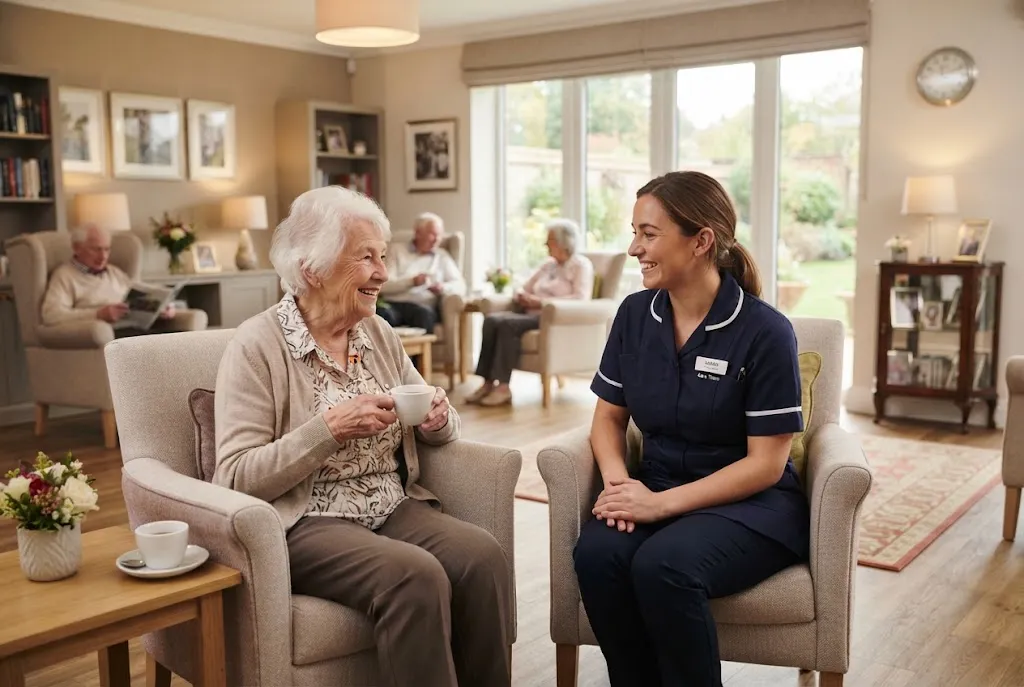
Searching for a care home near me can feel overwhelming, particularly when a decision needs to be made for an older relative or someone whose care needs are changing. Location matters, but it should not be the only factor. The right care home should provide suitable support, a safe environment, appropriate accommodation and a good standard of care.
Whether you are comparing residential care, nursing care or specialist dementia support, it helps to approach the search systematically. This guide explains how to find local care homes, compare reviews and inspection information, understand vacancies and costs, and identify questions worth asking before choosing a provider.
What Does “Care Home Near Me” Actually Mean?
A care home near you is a residential setting where people can live while receiving care and support. Depending on the type of home, services may include help with personal care, meals, accommodation, activities and nursing support.
The phrase care home near me is often used when someone wants to find providers within a convenient distance of their home or family. Being nearby can make visiting easier and may help relatives remain involved in the person’s care.
However, the closest care home is not necessarily the best choice. A slightly more distant provider may offer a more suitable care environment, specialist support or better availability.
How to Start Finding a Care Home Near Me
Begin by identifying the type of care required. This will immediately narrow the search.
Consider whether the person needs:
- Residential personal care
- Nursing care
- Dementia or memory-care support
- Short-term or respite care
- Support with mobility and daily activities
- Specialist care for a particular condition or disability
- End-of-life or palliative support
Once the requirements are clear, create a shortlist of homes within a practical travelling distance. Do not restrict the search too tightly at the beginning. A wider shortlist makes it easier to compare availability, services, prices and quality.
Care Home.co.uk and Other Online Directories
Online care directories can make the initial search much easier. Websites such as Carehome.co.uk provide information about care homes and can help families explore available options.
However, directories should be treated as a starting point rather than the final decision-making tool. Information such as prices, vacancies and services can change, so contact the provider directly to confirm current details.
Official regulatory information should also be checked alongside directory listings and reviews.
Check Care Home Reviews Carefully
Care home reviews can provide useful insight into the experiences of residents and their families. Reviews may highlight communication, staff attitudes, cleanliness, food, activities and general impressions of the home.
However, online reviews have limitations. Individual experiences can differ, and a review may not reflect the current management or staffing situation.
Instead of looking only at the overall rating, read several reviews and look for recurring themes. Pay attention to both positive and negative feedback.
What to Look for in Reviews
- How staff communicate with residents and families
- Whether residents appear treated with dignity
- Comments about cleanliness and facilities
- Quality and variety of meals
- Activities and social opportunities
- How concerns or complaints are handled
- Whether families receive regular updates
Use reviews to generate questions for your visit rather than treating them as definitive proof of quality.
Check the Official Inspection Information
Regulatory information is an important part of researching a care home. In England, the Care Quality Commission (CQC) regulates and inspects relevant health and social care services.
The CQC’s information can help families understand how a service has been assessed and identify issues that may require further questions. A provider’s current situation should still be discussed directly with the home because circumstances can change between inspections.
If you are looking outside England, check the appropriate regulator for Scotland, Wales or Northern Ireland because social care regulation is organised differently across the UK.
Finding a Care Home With the Right Type of Care
Care homes can have different levels and types of support. Finding a suitable environment starts with understanding what the person needs now and what support may become necessary later.
Residential Care
Residential care provides accommodation alongside assistance with everyday activities and personal care. It may suit someone who can no longer manage safely and independently at home but does not require continuous nursing care.
Nursing Care
Nursing homes provide residential accommodation with nursing support for people who have greater healthcare requirements. Ask the home exactly what nursing services are available and whether the person’s needs can be accommodated.
Dementia Care
People living with dementia may benefit from a care home with appropriate staff training, secure surroundings and routines designed around cognitive needs.
When visiting a dementia-care setting, look at how staff interact with residents and whether the environment appears calm, familiar and easy to navigate.
Care Home Vacancies and Availability
A care home’s quality is irrelevant if it cannot accommodate the person when care is needed. Care home vacancies can change frequently, so always contact providers directly for current availability.
Ask whether the available room is suitable for the person’s needs and whether the provider can support any specialist requirements.
It is also worth asking whether the home has a waiting list. A home without a current vacancy may still be worth considering if it is particularly well suited to the person’s long-term needs.
Questions About a Care Home Vacancy
- Is a room currently available?
- When could the person move in?
- Is the available room suitable for their needs?
- Is the room ensuite or shared?
- What furniture is provided?
- Can personal belongings be brought into the room?
- Are there additional charges for specific services?
- Can the home support changing care needs?
How Much Does a Care Home Cost?
Care home fees vary significantly across the UK. The cost can depend on location, accommodation, level of care, nursing requirements and the individual provider.
Rather than relying on a headline figure, ask the care home for a complete written breakdown of the expected fees.
Check whether the quoted fee includes accommodation, meals, personal care, activities and basic services. Also ask about additional costs for items or services that may fall outside the standard package.
Funding can be complicated, particularly when someone has significant assets or income. In England, a local authority care needs assessment and financial assessment can help determine eligibility for support. Different arrangements apply elsewhere in the UK.
Care Home Near Me vs Care at Home
A care home is not the only option. Some people can continue living in their own property with professional support.
Elderly care at home can include personal care, companionship, household support and specialist assistance delivered through scheduled visits or more intensive arrangements.
For someone who remains safe at home and values familiar surroundings, home care may be worth considering before making a residential move.
Our guide to home care services in the UK explains the different forms of professional support and the factors that influence costs.
On the other hand, a care home may be more appropriate when someone needs accommodation and care together, particularly when their support requirements can no longer be managed safely through scheduled home visits.
Questions to Ask During a Care Home Visit
A visit is one of the most valuable stages of the selection process. Prepare questions before arriving so that important details are not overlooked.
Questions About Care
- How are residents’ care needs assessed?
- How often are care plans reviewed?
- Can the home accommodate changing needs?
- How are medications managed?
- What happens if a resident becomes more dependent?
- Is nursing support available?
Questions About Staff
- What training do care staff receive?
- How are staffing levels managed?
- How does the home handle staff absences?
- Will residents have familiar carers?
- How are concerns or complaints handled?
The Questions About Daily Life
- What activities are available?
- Can residents choose when to get up and go to bed?
- How are meals planned?
- Can family members visit freely?
- Can residents bring personal furniture or belongings?
- Are there outdoor spaces?
What to Look for During a Care Home Visit
Do not focus only on the reception area. Look at the whole environment.
Notice how staff speak to residents. Are interactions respectful and patient? Do residents appear engaged or isolated? Is the atmosphere calm? Are communal areas clean and comfortable?
Also pay attention to less obvious details. Listen for alarms, observe whether residents can move around comfortably and check whether the layout seems appropriate for people with mobility or cognitive difficulties.
If possible, visit more than once and at different times. A home can feel different during mealtimes, evenings or weekends.
Care Home Reviews vs Your Own Visit
Reviews and inspection reports provide useful evidence, but nothing completely replaces seeing the environment yourself.
A review may describe an experience from months or years earlier. An inspection report also represents the circumstances at the time of the inspection. Your own visit allows you to see how the home currently feels and ask questions about the specific person’s needs.
The strongest approach is to combine official information, independent reviews, direct conversations and personal visits.
How Family Members Can Compare Care Homes
When several homes appear suitable, create a simple comparison list. Consider the factors that matter most to the person who will actually live there.
- Location and visiting convenience
- Type of care available
- Regulatory information
- Current availability
- Overall cost
- Additional charges
- Staffing and continuity
- Room quality
- Food and activities
- Family visiting arrangements
- Ability to accommodate future care needs
Ranking these factors can prevent a decision from being driven entirely by price or distance.
Red Flags to Consider
No care home is perfect, but certain issues deserve closer attention.
Be cautious if staff are unwilling to answer reasonable questions, fees are unclear, the care plan is poorly explained or the provider cannot clearly describe how it responds to changing needs.
Unexplained differences between advertised information and what you see during a visit should also be investigated.
A single negative observation does not necessarily mean a home is unsuitable. Instead, ask for an explanation and consider the evidence as a whole.
Making the Final Decision
Once you have visited several providers, compare the evidence rather than relying on first impressions.
Consider which home best matches the person’s care requirements, personality and preferences. Think about how easy it will be for family members to visit and whether the provider appears capable of handling future changes in care needs.
Before signing an agreement, request a copy of the contract and fee schedule. Make sure you understand what is included, what can result in additional charges and how changes to the arrangement are handled.
Final Thoughts
Finding the right care home near me is about much more than choosing the closest available room. Location, quality of care, regulatory information, reviews, staffing, costs, facilities and specialist support all deserve careful consideration.
Start with a clear understanding of the person’s needs, build a shortlist and investigate each provider from several angles. Check official information, read reviews carefully, ask detailed questions and visit the homes in person before making a final decision.
Most importantly, involve the person receiving care wherever possible. Their preferences, comfort and dignity should remain central throughout the process. A well-researched decision can make the transition to residential care more reassuring for both the individual and their family.
As you navigate the complexities of selecting an appropriate care home for your loved one, it is essential to consider not only the immediate needs of the individual but also the broader context of care services available. The quality of support provided by care homes often hinges on the dedication and expertise of their staff. This is where the growing demand for skilled professionals in the sector becomes increasingly relevant. By exploring opportunities in the field, such as those found in care jobs UK, you can gain insights into the workforce behind the care services, ensuring that the facility you choose is staffed by qualified individuals who are committed to delivering high standards of care. Understanding this connection can significantly enhance your decision-making process, ensuring that both the quality of care and the environment are conducive to a positive experience for your loved one.