

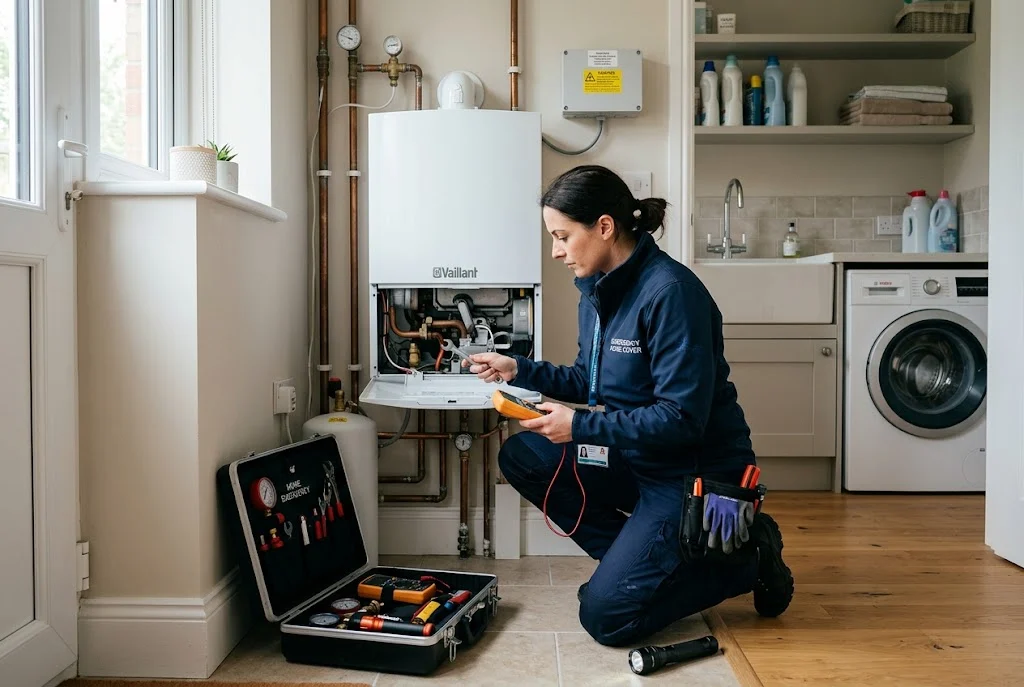
Home emergency cover can provide useful support when an unexpected problem suddenly affects essential parts of your home. A broken boiler, burst pipe, blocked toilet or electrical failure can quickly become more than an inconvenience, particularly when the problem happens outside normal working hours.
However, emergency cover is not the same as standard home insurance. What a policy covers depends on the provider, level of cover, exclusions and terms and conditions. Before paying for a policy, it is therefore important to understand what home emergency cover normally includes, what it may exclude and how it differs from other forms of household protection.
What Is Home Emergency Cover?
Home emergency cover is a type of assistance designed to help homeowners or other eligible policyholders deal with specified sudden and unexpected household emergencies.
Depending on the policy, the provider may arrange for an approved tradesperson or engineer to attend the property following a covered emergency. The policy may contribute towards call-out charges, labour and sometimes certain parts, subject to the provider’s limits and terms.
The precise definition of an emergency varies between providers. A problem that is inconvenient may not necessarily qualify as an insured emergency. Policies commonly focus on situations where immediate attention is considered necessary to prevent further damage, restore an essential service or make the property safe.
What Is Included in Home Emergency Cover?
When researching what is included in home emergency cover, it is important to read the individual policy wording rather than relying on the headline description.
Many home emergency policies can provide assistance for some combination of the following areas:
- Boiler or central heating emergencies
- Plumbing emergencies
- Blocked toilets or drains in specified circumstances
- Electrical emergencies
- Gas supply emergencies
- Roofing emergencies following certain unexpected events
- Problems affecting doors, windows or locks in specified situations
- Alternative accommodation in some policies and circumstances
Not every provider includes all of these areas. Some policies concentrate on heating and plumbing, while others offer broader household emergency assistance.
Does Home Emergency Cover Include Boiler Problems?
Boiler breakdown is one of the main reasons homeowners consider emergency household cover. However, boiler protection varies considerably between policies.
Some plans may cover emergency engineer call-outs and labour when a qualifying boiler problem occurs. Others may impose limits based on the age, type or condition of the boiler.
It is also important to distinguish emergency cover from routine boiler maintenance. A policy designed to respond to emergencies should not automatically be considered a replacement for regular servicing.
Our guide to boiler service costs in the UK explains what a professional service involves and why routine servicing remains an important part of looking after a heating system.
Likewise, our boiler maintenance guide covers practical ways to monitor your heating system and recognise when professional attention may be required.
Does Home Emergency Cover Include Plumbing?
Plumbing emergencies can cause significant disruption because a burst pipe or serious leak can potentially result in water damage. Depending on the policy, emergency plumbing assistance may be available when an unexpected incident requires urgent attention.
However, policies may distinguish between an emergency and a pre-existing or gradually developing problem. General maintenance, worn components and issues that have been allowed to deteriorate may not be covered.
Before making a claim, check the policy wording to establish whether the specific plumbing problem meets the provider’s definition of an emergency.
Does Home Emergency Cover Include Electrical Problems?
Some home emergency policies include certain domestic electrical failures. The purpose is generally to provide assistance when an unexpected electrical problem creates an urgent situation or leaves essential household services unavailable.
Coverage can be subject to restrictions. For example, the policy may only cover specified electrical emergencies rather than general electrical improvements or faults caused by poor maintenance.
Never attempt potentially dangerous electrical work yourself. If you believe there is an immediate electrical safety risk, follow appropriate safety guidance and use a suitably qualified electrician.
What About Gas Emergencies?
Gas-related problems should always be treated seriously. If you smell gas or suspect a gas leak, do not wait for an ordinary home emergency contractor to investigate the issue.
Follow the appropriate emergency gas safety procedure for your area and contact the relevant emergency gas service where necessary. Do not attempt to repair a suspected gas leak yourself.
For routine gas appliance faults, a suitably qualified professional may be required. Our guide to gas appliance repair explains how professional servicing and repair can apply to domestic gas cookers, hobs and other appliances.
What Does Home Emergency Cover Not Include?
Understanding exclusions is just as important as knowing what a policy covers. Home emergency cover is not designed to pay for every household repair.
Common exclusions or limitations can include:
- Routine maintenance and servicing
- Pre-existing problems
- Gradual deterioration or normal wear and tear
- Non-emergency repairs
- Cosmetic damage
- Problems that existed before the policy started
- Repairs above the policy’s financial limit
- Replacement of an entire appliance where the policy only provides repair assistance
- Work involving components or circumstances specifically excluded by the policy
The exact exclusions differ between providers, so always read the policy documentation before assuming that a particular problem is covered.
Home Emergency Cover vs Home Insurance
One of the most important distinctions to understand is the difference between home emergency cover and standard home insurance.
Buildings insurance generally protects against specified risks affecting the structure of a property, while contents insurance can cover certain belongings inside the home. Home emergency assistance serves a different purpose by providing support for specified sudden household problems.
Some insurers offer home insurance with home emergency as an optional add-on or as part of a broader package. Other providers sell emergency assistance separately.
Having home insurance does not necessarily mean that every boiler, plumbing, electrical or heating emergency is automatically covered. Check your policy schedule and wording before relying on it.
Is Home Emergency Insurance the Same as Emergency Cover?
The terminology can be confusing because providers may use phrases such as home emergency insurance cover, emergency household cover and home emergency assistance when describing similar types of protection.
Despite the terminology, the important point is the actual policy wording. Look at the insured events, financial limits, exclusions, excess, claim process and conditions rather than choosing a policy based only on its name.
A policy may appear comprehensive in its marketing but contain significant limitations in the detailed terms. Comparing the actual benefits gives you a much clearer picture of the protection you are buying.
How Does Home Emergency Cover Work?
If a covered emergency occurs, the usual process is to contact the provider using the claims or assistance number supplied with your policy. The provider may then assess the circumstances and arrange an appropriate tradesperson or engineer.
Depending on the policy, the provider may cover eligible call-out and labour costs up to a specified limit. You may still have to pay an excess, contribute towards costs above the policy limit or pay for work that falls outside the insured emergency.
Always contact the provider before arranging your own contractor if the policy requires prior authorisation. Using an independent tradesperson without approval could affect your ability to claim.
How Much Does Home Emergency Cover Cost?
The cost of home emergency cover depends on factors such as the provider, level of protection, property type and number of systems or services included.
Some providers offer emergency assistance as an optional addition to a home insurance policy, while others sell standalone plans. Boiler-only protection can also differ from broader household emergency cover.
Rather than comparing price alone, consider what the policy actually provides. A cheaper plan with a low financial limit or extensive exclusions may offer less useful protection than a slightly more expensive policy with broader terms.
How to Compare Home Emergency Cover
If you want to compare home emergency cover, create a simple checklist before looking at prices. This makes it easier to compare different policies on the same basis.
Check the following:
- Which emergencies are covered?
- Is boiler and central heating cover included?
- Are plumbing emergencies included?
- Is electrical emergency assistance available?
- Are gas-related emergencies covered?
- What is the maximum claim amount?
- Is there an excess?
- Are parts included?
- Are there restrictions based on appliance age?
- Are pre-existing faults excluded?
- Is there a waiting period before claims can be made?
- How does the claims process work?
This approach is more useful than simply searching for the best home emergency cover based on price or brand recognition.
What Makes a Good Home Emergency Cover Provider?
The best home emergency cover provider for one household may not be the best choice for another. Your priorities might include boiler protection, plumbing assistance, a high claims limit or access to emergency tradespeople at any time.
Look for clear policy wording and transparent information about exclusions and financial limits. It is also worth checking how the provider handles claims and whether you have to arrange your own engineer or use the provider’s approved network.
If the policy includes boiler assistance, check whether it covers your particular boiler type and whether age restrictions apply.
Home Emergency Cover for Landlords
Landlords may also consider home emergency landlord cover where appropriate. Rental properties can experience unexpected plumbing, heating, electrical and security problems that require prompt attention.
However, landlords should not assume that an emergency assistance policy replaces their other legal and maintenance responsibilities. Gas safety requirements, electrical responsibilities and general property maintenance remain separate matters.
A landlord should therefore consider emergency cover as one part of a wider property management strategy rather than as a substitute for routine inspections and preventative maintenance.
Should You Buy Home Emergency Cover?
Whether home emergency cover is worthwhile depends on your circumstances, budget and appetite for unexpected repair costs.
It may appeal to homeowners who want access to an organised emergency response and prefer to pay a known premium rather than deal with certain unexpected call-out costs themselves.
On the other hand, homeowners with substantial savings for unexpected repairs may prefer to pay for emergency work when it occurs. The value of a policy depends on its actual coverage, exclusions and cost rather than the concept of emergency cover alone.
Questions to Ask Before Buying
Before choosing a policy, ask a few practical questions. Is the boiler covered if it is older? Are parts included? Is there an excess? What happens if the engineer determines that the issue is not an emergency?
You should also check whether there is a limit on the number of claims you can make and whether the provider imposes a waiting period after purchasing the policy.
These details can make a substantial difference when you eventually need assistance.
Home Emergency Cover and Routine Maintenance
Emergency cover works best when combined with sensible preventative maintenance. A policy should not encourage homeowners to ignore routine servicing or delay repairs.
For example, arranging regular boiler servicing can help keep your heating appliance properly maintained, while addressing minor plumbing or electrical issues promptly may reduce the risk of a more disruptive failure.
Emergency assistance is there for unexpected situations. It should not be treated as a substitute for maintaining the systems and appliances that keep your home functioning.
Final Thoughts on Home Emergency Cover
Home emergency cover can provide valuable assistance when a sudden household problem needs urgent attention, but the level of protection varies considerably between policies. Boiler breakdowns, plumbing problems, electrical failures and other emergencies may be covered, but exclusions, limits and eligibility conditions can apply.
The best approach is to read the policy wording carefully and compare the actual benefits rather than focusing solely on the headline price. Pay particular attention to emergency definitions, financial limits, excesses, waiting periods, pre-existing conditions and appliance restrictions.
Remember that emergency cover does not replace routine maintenance. Regular boiler servicing and sensible household maintenance remain important for keeping your property safe and reliable.
If you are specifically concerned about boiler problems, read our guide to boiler maintenance and our detailed explanation of boiler service costs in the UK. For gas cooker and hob problems, our gas appliance repair guide provides further information.
For authoritative information about home insurance and choosing appropriate insurance protection, consumers can also consult the Financial Conduct Authority’s insurance guidance.